Importers Receiving Almost $8,000 Per Entry from IEEPA Refunds, Survey Finds
The race is on for importers to claim their International Emergency Economic Powers Act (IEEPA) tariff refunds.
As importers start filing, US Customs and Border Protections (CBP) processing claims and beginning to issue refunds. Along with these refunds are coming lots of data about the refund process from refund amounts, rejection rates, performance by CBP’s Centers of Excellence (COEs) and more.
Freight Right, a licensed customs brokerage and freight forwarding company based in Los Angeles, California, has conducted an encompassing survey of their own customs brokerage IEEPA refunds data. The survey has identified early trends in entry refund amounts, which industries are receiving refunds the fastest and in what percentage relative to other industries and more.
What are IEEPA tariff refunds?
IEEPA tariff refunds refer to the return of duties paid under tariff actions imposed through the International Emergency Economic Powers Act. After legal challenges to those tariffs, the US Supreme Court ruled the tariffs were illegally implemented by the Trump administration and ordered US Customs and Border Protection to administratively process refunds for affected importers.
To implement that process, CBP developed the Consolidated Administration and Processing of Entries (CAPE), inside the Automated Commercial Environment (ACE). CAPE went live on April 20, 2026. The system allows eligible IEEPA tariff refund claims to be submitted through ACE rather than handled through a fragmented manual process.
The process is not automatic for most importers. CBP has the authority and system capability to process certain refunds, but importers or their customs brokers still need to take affirmative action by submitting CAPE declarations through ACE.
It’s important to point out that many businesses may be eligible for refunds. That said, many of those same businesses are at risk of not receiving them quickly, or at all, if they do not identify eligible entries, prepare the right filing data, or resolve account issues before deadlines and liquidation status limit their options.
Importers that filed for IEEPA refunds are starting to get their money and get it quickly
An analysis of anonymized IEEPA tariff refund work handled by Freight Right found that the average entry refund size per entry is around $8,000 dollars.

The data suggests that IEEPA tariff refunds may represent a meaningful cash recovery opportunity for importers, but one that depends heavily on execution. Importers need to know which entries are eligible, who was listed as the Importer of Record, whether the right broker has filing authority, whether their ACE account and ACH setup are current, and whether their entries fall within the correct phase of CBP’s CAPE process.
That creates a gap between the total amount potentially available and the amount importers are actually positioned to claim.
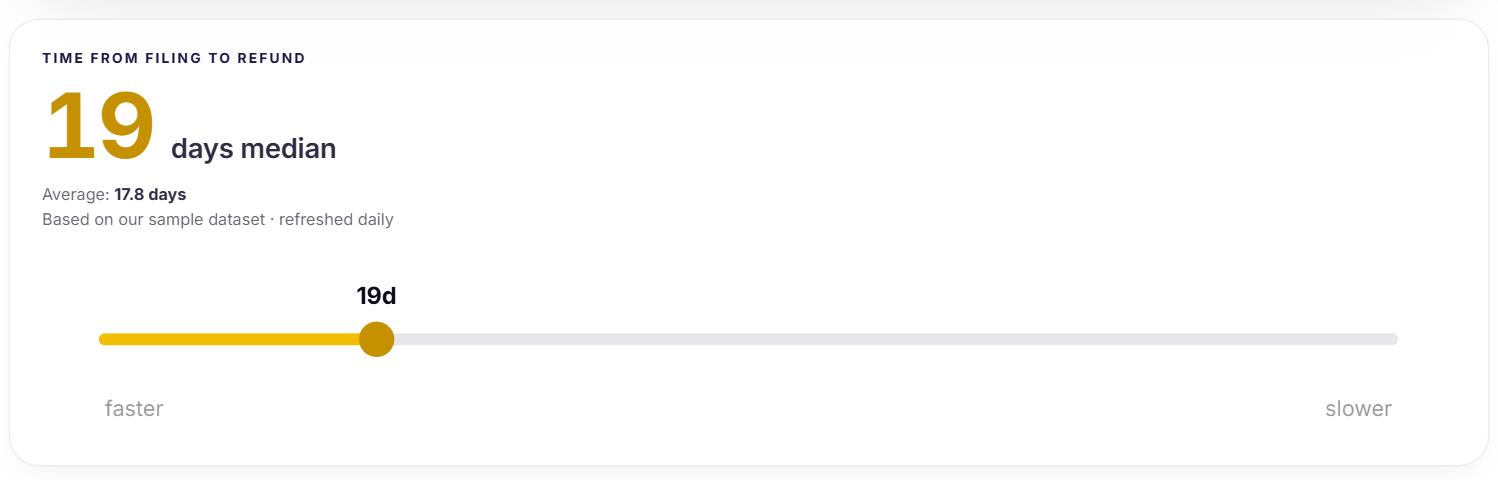
Freight Right’s data is also finding that refunds are going to importers very quickly. So far, just over 2 weeks, 14 days, on average.
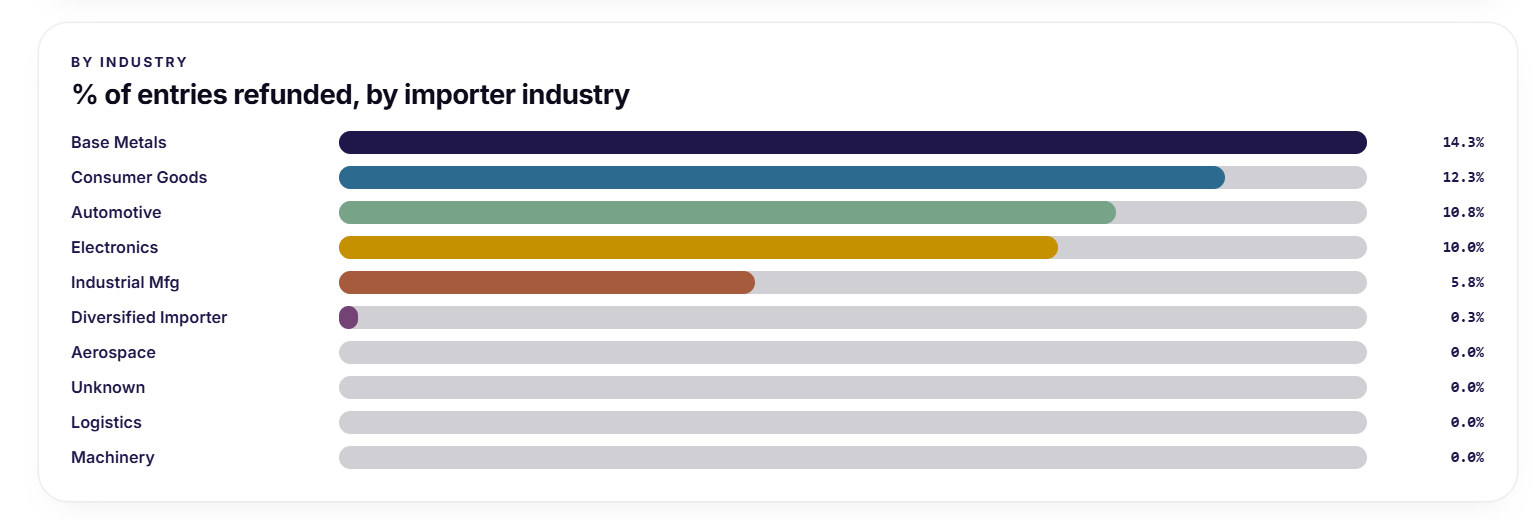
Importers from the Consumer Goods industry are getting refunds most often
Freight Right data is showing that consumer goods importers are making up the largest category of importers getting IEEPA refunds. Consumer goods is a massive industry in the US and covers a wide range of importers both in size and offerings from one-man Amazon FBA store to multinational retailer and everything in between.
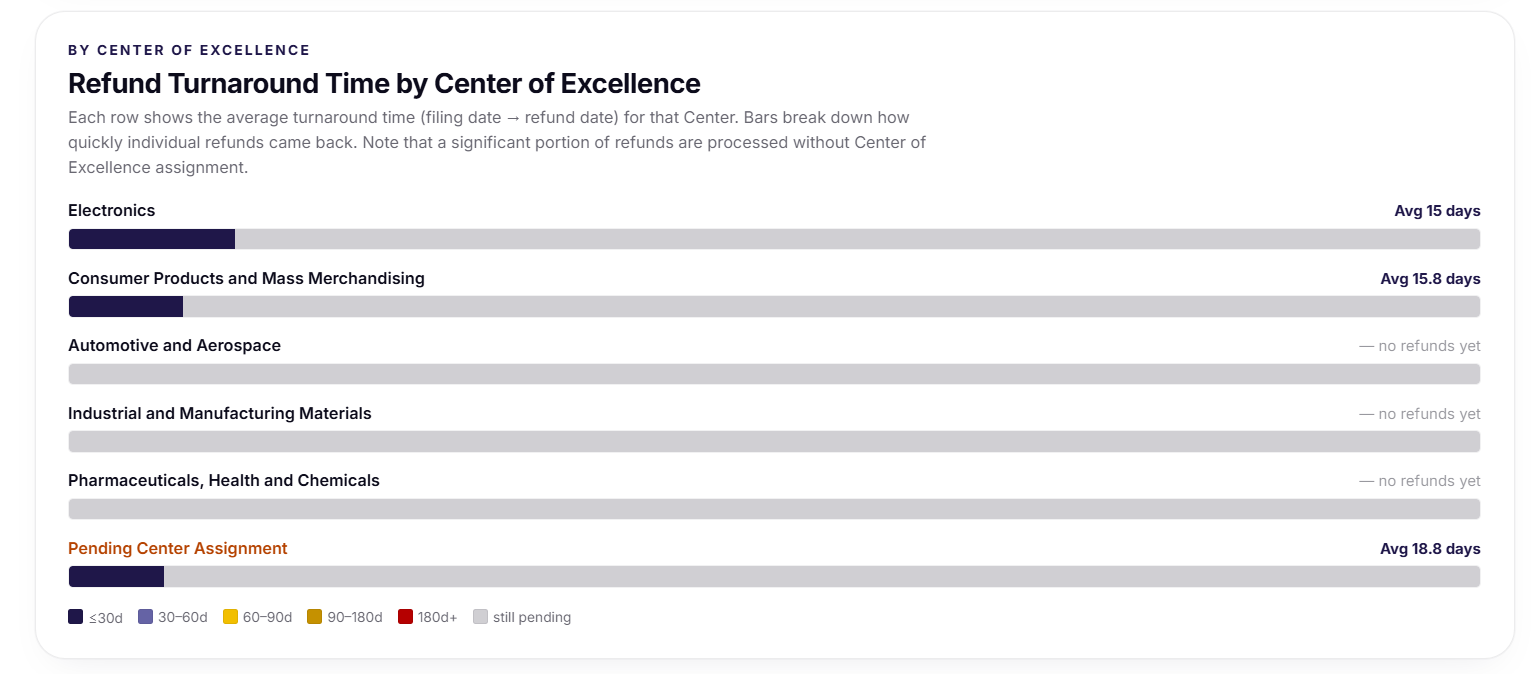
Turnaround times for refunds vary by CBP Centers of Excellence and Expertise (CEEs).
CEEs are specialized, industry-focused organizations within US Customs and Border Protection that manage post-release trade activities. As Phase 1 of the IEEPA refunds continues Freight Right’s data is revealing that not all Centers of Excellence are processing refunds at the same rate. Those handling Electronics and Consumer Products are processing refunds closer to 14 days while others have yet to process refunds.
Importers readiness to file for IEEPA refunds is across the board
Freight Right has found that importers’ knowledge of the IEEPA tariffs, including that they are happening, varies. Some businesses still do not know whether they paid IEEPA tariffs. These importers may have relied on brokers, freight forwarders, or internal trade teams without ever isolating the duty line items tied to IEEPA. They may know tariffs affected their landed costs, but they have not reviewed entry-level data to determine whether a refund is available.
Other importers know about IEEPA tariff refunds but have not acted. These businesses may assume the process is automatic, that their broker is already handling it, or that the refund amount is too small to justify review. In some cases, those assumptions may be wrong.
A third group has tried to file but remains blocked. These importers may have ACE access issues, incomplete ACH setup, missing entry records, or confusion over which broker has authority to file. Some may have worked with multiple brokers over the relevant period and do not have one centralized view of their eligible entries.
Another group has already filed but may not know whether all eligible entries were captured. A CAPE submission does not necessarily mean every refundable entry has been included, especially if the importer’s data is incomplete, segmented across multiple brokers, or affected by entries that become eligible in later phases.
Finally, some importers face a more complex filing problem. These businesses may have multiple Importer of Record numbers, high entry volume, entries handled by several brokers, foreign ownership structures, DDP transactions, or refund routing issues involving US banking and ACH setup. For these importers, the filing process is less about a single form and more about data reconciliation and coordination.
Importers who have already filed still might need a second review of their filed entries
Some importers believe their work is complete because a CAPE declaration has already been submitted. That isn’t always the case.
Freight Right’s review process shows that already-filed importers may still need to ask several questions:
Did the filing include every eligible entry?
Were entries from every broker included?
Were entries tied to every relevant Importer of Record number reviewed?
Did the filing include only entries eligible for the current CAPE phase?
Were any entries rejected or excluded because of validation issues?
Were any entries not yet eligible but likely to become eligible later?
Has the importer confirmed that ACH and ACE refund information are current?
Has the importer monitored whether accepted declarations have moved to liquidation, reliquidation, refund calculation, and payment?
This is where many importers may underclaim without realizing it. Importers who self-service their filing can be accurate for the entries included, but still incomplete if the importer did not have a full entry population at the outset.
That issue is especially common when import records are spread across departments, brokers, subsidiaries, or systems.
What importers should be checking now
Importers that may have paid IEEPA tariffs should begin with an entry-level review. The goal is to understand not only whether duties were paid, but whether the business is positioned to claim the refund correctly.
A practical checklist includes:
Confirm whether the company was the Importer of Record on affected entries.
Identify all brokers that filed entries during the relevant period.
Pull entry summaries and duty payment data from ACE or broker records.
Separate entries by liquidation status and CAPE phase eligibility.
Confirm whether any CAPE declarations have already been submitted.
Check whether any eligible entries were excluded, rejected, or left for later phases.
Verify that ACE account access is active.
Confirm ACH refund banking information.
Identify whether any refunds may be routed to a designated party through CBP Form 4811.
Create a process for monitoring accepted filings through liquidation, reliquidation, refund calculation, and payment.
Importers should also avoid assuming that all entries are treated the same. Some entries may be eligible for immediate CAPE filing. Others may require later-phase monitoring or a different procedural strategy depending on liquidation status and CBP guidance.
What the IEEPA tariff refund filing process means for importers
The IEEPA tariff refund process is a very rare moment in US trade policy and for importers. Few if any other moments in US policy have resulted in such an upheaval and reversal where so many groups, businesses and consumers, were so affected that the policy needed to be deemed illegal in the highest court and tangible refunds issued.
For some businesses, the next step is awareness. They need to determine whether they paid IEEPA tariffs at all.
For others, the next step is validation. They know they may be eligible, but they need to estimate the refund amount and decide whether the opportunity is worth pursuing.
For self-service filers, the next step may be quality control. They need to determine whether the filing was complete, accepted, and connected to the correct payment setup.
For blocked filers, the next step is remediation. They need to resolve ACE, CAPE, Importer of Record, broker, or ACH issues before the refund can move.
For complex importers, the next step is coordination. They need a structured review across brokers, entry records, internal teams, and refund status data.
The larger lesson from Freight Right’s filing data is that IEEPA tariff refunds are a data problem as much as a customs problem. Businesses that can identify the right entries, prepare clean filings, and monitor the process are better positioned to recover money. Businesses that wait may lose time, miss eligible entries, or face avoidable delays.
How Freight Right helps importers with IEEPA tariff refunds
Freight Right is a licensed customs broker that helps importers review entry data, identify eligible IEEPA tariff refund opportunities, prepare CAPE filings, coordinate with prior brokers, troubleshoot ACE and CAPE issues, and monitor refund status.
For importers that do not know whether they are eligible, Freight Right can help review available records and estimate potential refund value. For importers that already filed, Freight Right can help assess whether the filing appears complete and whether additional entries may need review. For importers facing ACE, ACH, Importer of Record, or broker-coordination issues, Freight Right can help identify the practical next steps needed to move the process forward.
IEEPA tariff refunds are moving. The remaining question for many importers is whether their own business is ready to claim what may be available.
Methodology
Freight Right analyzed anonymized customs brokerage records related to IEEPA tariff refund work.
Refund amounts were grouped into bands to protect client confidentiality. The analysis excludes importer names, account numbers, entry numbers, company identifiers, banking information, and other confidential customs records.
Figures reflect Freight Right’s own filing and review data and should not be interpreted as a national estimate of all IEEPA tariff refunds. The dataset may overrepresent importers with complex customs issues, larger refund motivation, or a need for broker support.
More News

How Many Customs Brokers Do You Need? Why a Single Broker is the Best Option
Do you really need multiple customs brokers? Find out how a single freight forwarding and customs brokerage provider saves you time and money.
Why Customs Brokers Are Better Positioned Than Lawyers to Handle IEEPA Tariff Refunds
IEEPA tariff refunds are managed through CBP systems, ACE data, CAPE declarations, and ACH refund setup. Learn why licensed customs brokers are often better positioned than lawyers to help importers recover eligible tariff refunds efficiently.
Navigating LAX Air Cargo: Freight Right's Expertise as Customs Broker
Freight Right leads in LAX customs brokerage, managing over 100K tons of air cargo annually. Discover our role in LAX’s cargo efficiency and compliance.

2025 U.S. Consumer Expectations for Two-Day vs. Same-Day Delivery
US consumer expectations have continued to evolve each year. We've pulled the latest research and surveys regarding US consumer buying preferences specifically around the desire around 2-day and same-day shipping preferences.

Transpacific Carriers Face Losses as Feb Bookings Close - TFX Update wk. February 2, 2026
Ocean freight rates from China to USWC have hit a breakeven low of $1,450 per container. As the Chinese New Year halts Asian manufacturing, explore why rates are falling, the impact of late-week bookings, and the outlook for March contract negotiation.

Many loopholes in the US-China trade deal
The Trade Deal signed between the two governments has become subject to much discussion as critics say that it's vague and doesn't address the actual problems.

Over Half of Direct-to-Consumer Merchants Selling Big & Bulky Items Can’t Fulfill International Orders
A Freight Right survey reveals 78% of big and bulky ecommerce merchants struggle to fulfill international orders due to freight, pricing, and operational barriers.
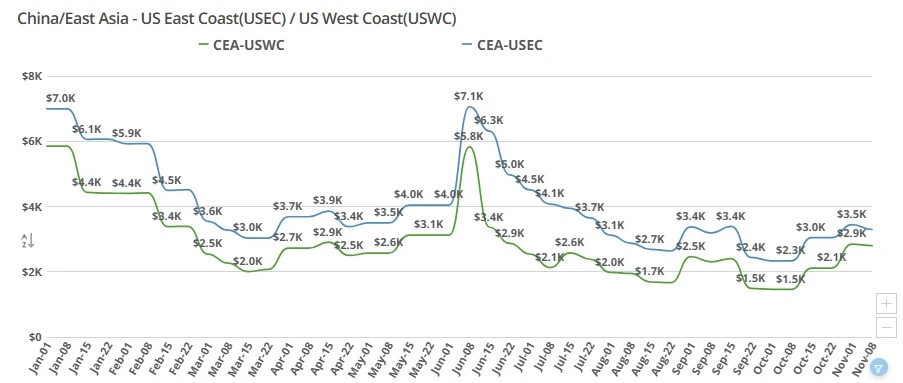
China-US Ocean Rates Ease Again as Post-Peak Lull Deepens - TFX Update wk. November 10, 2025
Transpacific ocean freight rates continue to decline as post-peak demand cools. China–US West Coast rates near $1,700, East Coast around $2,600 per FEU.

U.S. Ends De Minimis Exemption Globally: Major Expansion of April 2025 Policy
On April 24th, The US Department of Homeland Security and US Customs & Border Protection have released new guidance around the end of the US' de minimis exception. See the changes ahead for importers and customs professionals.
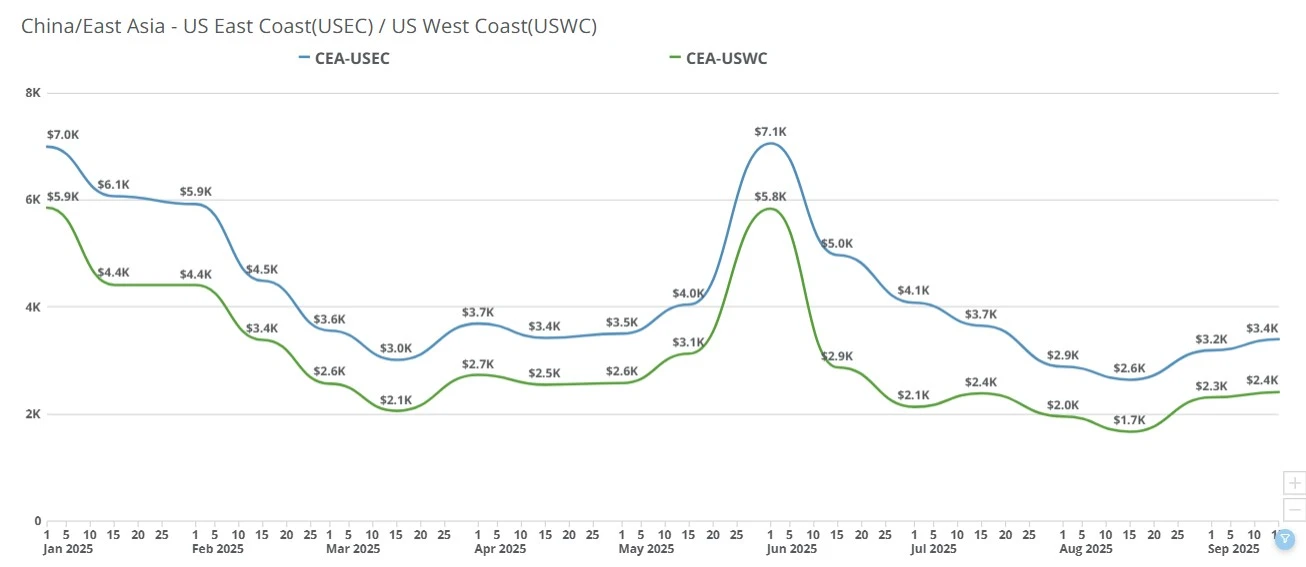
Carriers Rollback September's GRI and Competition Among Forwarders Heats Up - TFX Update wk. September 15, 2025
China–US freight rates spiked up to $900 to start September but,in a rare move, promptly rolled back to pre-GRI amounts this week to entice bookings.