IEEPA Tariffs Update: What Importers Need to Know Now (January 2026)
Every day that passes bring us closer (hopefully?) to a resolution on the US Supreme Court's hearing of the Trump administration's use of IEEPA to implement tariffs.
It couldn't be better timing to have a leading authority on this court case sit down with Freight Right's Robert Khachatryan to let importers in on what they need to know.
In this webinar, Freight Right's CEO Robert Khachatryan sits down with Pete Mento of Baker Tilly for a timely, in-depth conversation about the U.S. Supreme Court’s landmark case challenging the legality of tariffs imposed under the International Emergency Economic Powers Act (IEEPA). With billions of dollars in duties at stake and importers across industries awaiting clarity, this discussion is designed to help businesses understand what’s happening now, what could happen next, and how to prepare operationally for whatever the Court decides.
The webinar starts by unpacking the central legal issue: whether the Trump administration lawfully used IEEPA, traditionally an emergency-powers statute, to impose sweeping import tariffs. Lower courts have already held that IEEPA does not authorize such broad tariff authority, a question now before the Supreme Court in consolidated cases including Learning Resources v. Trump and Trump v. V.O.S. Selections.
Pete breaks down how lower court rulings have affected importers and explains the mechanics of potential refunds if the tariffs are struck down, from post-entry adjustments and protests to liquidation timelines and audit documentation. Robert steers the conversation toward practical implications, like sourcing the right records, preparing for customs valuation scrutiny, and assessing DDP pricing changes.
Throughout the session, both experts emphasize that, regardless of the ruling, this decision will reshape importer compliance, refund strategies, and tariff risk management. The conversation delivers actionable insights for companies of all sizes grappling with uncertainty, from audit readiness and documentation best practices to strategic planning for potential refunds or future tariff frameworks.
Additional Context and Resources on the IEEPA Tariffs Case
For importers looking to go deeper on the legal and policy backdrop discussed in this webinar, several public resources help frame why the Supreme Court’s review of the IEEPA tariffs is so consequential.
At the center of the dispute is Learning Resources, Inc. v. Trump, a case that challenges whether the Trump administration lawfully used the International Emergency Economic Powers Act (IEEPA) to impose sweeping tariffs. A plain-English overview of the case, its origins, and the questions now before the Supreme Court can be found on Wikipedia’s case summary, which outlines how lower courts rejected the government’s interpretation of IEEPA authority:
For a more technical legal breakdown, SCOTUSblog maintains a detailed case file explaining how Learning Resources v. Trump and related cases were consolidated, what arguments were presented during oral arguments, and why the Court’s decision could redefine the limits of executive trade authority:
Congress has also weighed in on the implications. A Congressional Research Service (CRS) Legal Sidebar analyzes the lower-court rulings and explains why the courts found that IEEPA was not intended as a tariff-setting statute — an important backdrop for understanding why refunds are even being discussed:
As the case has progressed, trade law firms and industry publications have begun outlining what importers should prepare for if the Supreme Court affirms the lower courts. Clark Hill’s litigation update summarizes where refund claims could stand, how administrative remedies may be handled by CBP, and what practical steps importers should consider now.
Business and trade press have also highlighted the unusual uncertainty surrounding the case. Utility Dive and Vision Monday both cover how the tariffs remain in limbo, why the potential refund pool could reach hundreds of billions of dollars, and why the Supreme Court’s decision is being closely watched across multiple industries.
Finally, for readers interested in the broader policy ramifications, analysis from the Council on Foreign Relations and Womble Bond Dickinson explores how this case fits into the Supreme Court’s recent skepticism of expansive executive authority and how a ruling against the government could reshape future U.S. trade actions:
Watch the full webinar here on YouTube, IEEPA Tariffs Update: What Importers Need to Know Now, or read the transcript of the interview below.
Baker Tilly and Freight Right Are Helping Importers Get Their Paperwork Ready
Robert Khachatryan (Freight Right):
All right. Uh, I think we’re live now. Pete, thanks for joining me.
Pete Mento (Baker Tilly):
It’s my pleasure. Thanks for having me.
Robert Khachatryan:
Pete, so, um, we mostly have customers listening and watching this. And almost everybody I talk to is extremely skeptical about the IEEPA ruling, right? Mostly what I hear is people just don’t believe the Supreme Court will rule them illegal.
And then people who think the Supreme Court might rule them illegal just don’t think refunds are coming. Right?
Now, I’m a very skeptical guy myself in general, but I have a lot of faith in the Supreme Court, and it sounds like that’s where we’re headed.
I don’t want this conversation to be about predicting the Supreme Court outcome, but more about: if that happens, what are some practical things people can do?
You’re probably the most followed voice in the industry on this topic, so I’m very excited to talk to you. To set the stage, can you explain in a few words what this ruling is actually about?
Pete Mento:
Yeah, happy to. The reason this ruling is getting so much attention is pretty straightforward.
We’ve paid around $300 billion worth of IEEPA and fentanyl-related tariffs on imports from around the world. It was done under a trade remedy, but it wasn’t really a trade remedy.
Most of you are familiar with tariffs. We deal with them every day. But there are other tariffs that are trade remedies like Section 232 on steel and aluminum, Section 301 tariffs.
IEEPA is different. It’s a concept given to the president that had never really been used before. In times of crisis or emergency, the president could take immediate action to assist the American public.
When these tariffs went into effect, the national emergencies cited were:
The fentanyl crisis and overdose deaths
Perceived critical damage to the U.S. economy from unfair trade practices
So the question became: Was IEEPA the proper authority to impose these tariffs?
Some believe the president had broad authority. Others argue existing remedies like 301s, 232s, 122s, or 338s should have been used but those require investigations, studies, time, and limits.
IEEPA had none of those constraints. The tariffs were immediate. We all woke up one day and there were tariffs on nearly everything from everywhere.
The Supreme Court case stems from two lower court cases.
First, the Court of International Trade (CIT) ruled the president did not have authority under IEEPA. There was a lot of celebration.
The White House appealed. The Court of Appeals agreed with the CIT.
Then the White House took it to the Supreme Court.
At the time, estimates were that $160–$170 billion was at stake, focused on China, Mexico, and Canada.
Listening to Supreme Court oral arguments was eye-opening. The justices were extremely prepared, and two things stood out:
Skepticism toward the government’s case
Concern over how to unwind something this large
Now the arguments are done. No one should pretend to know how they’ll rule — though many are speculating.
The big question becomes: If this goes our way, how does the government refund that much money?
Robert Khachatryan:
Thanks, Pete. One immediate question is about countries affected.
At the CIT level, this focused on China, Mexico, and Canada. But you’ve said before this could apply to all IEEPA tariffs. How does that work?
Pete Mento:
There’s a three-part answer.
First, the CIT has said plainly: they will not stand in the way of refunds.
Second, the court said they’re not going to retry this origin by origin. If IEEPA is invalidated, it applies broadly. Think of it as precedent.
Third — and this is huge — the court said there is already an administrative process for refunds through post-entry adjustments and protests. They don’t want this tied up in litigation.
That solves a massive problem around liquidation timelines. Many early entries would otherwise have fallen outside the window.
The court has suggested they will extend timelines so every importer has a fair chance.
Robert Khachatryan:
That makes sense, especially considering how fragmented importer records are. Many companies used multiple brokers.
Can you explain what documents importers actually need for an audit?
Pete Mento:
Two huge missing pieces in most brokerage files. Purchase orders, showing negotiated price and terms and proof of payment, what was actually paid to the supplier
Third, and crucial: proof of duty payment. Often brokers paid first, then were reimbursed.
If you switched brokers, you’ll need to pull data from ACE and contact each filer. It’s time-consuming but unavoidable.
Robert Khachatryan:
Last time we spoke, you were recommending filing lawsuits with CIT to delay liquidation. You’re no longer recommending that. Why?
Pete Mento:
Because the CIT made it clear refunds will go through the administrative process, not the courts.
Trade attorneys pushed hard to keep this in litigation — for obvious reasons — but the court shut that down.
The Supreme Court will likely rule, then tell the CIT: “You figure out the mechanics.”
Robert Khachatryan:
Let’s talk outcomes.
If the Supreme Court upholds the tariffs — is that the end of the road?
Pete Mento:
If they uphold them, they’ll have to explain why. And that opens the door to new legal challenges.
If they strike them down, there are several scary possibilities: no refunds, credits instead of refunds, claiming importers weren’t harmed because costs were passed on
That last one would imply 360 million Americans were the injured party which is absurd.
Most likely, refunds go to importers, and the courts let the market sort out downstream effects.
Robert Khachatryan:
That aligns with what we’re hearing from customers — many couldn’t fully pass tariffs on.
Let’s talk valuation and DDP. We saw dramatic drops in declared values.
Pete Mento:
I feel terrible for companies that went DDP.
I’ve audited entries where unit values dropped 60% overnight. That’s a massive red flag.
Customs will investigate. The U.S. importer is still the notified party. If there’s fraud, you get the call.
Foreign suppliers played games. They’ll be sanctioned. Importers will be questioned.
Robert Khachatryan:
But not all valuation changes were illegitimate. Some were genuine tariff optimization.
Pete Mento:
True — but if you make a major change now, customs will ask why you didn’t do it before.
You need, prior disclosure for past entries, a written memo explaining your reasoning, leadership sign-off, show your work. If you guessed, you’re in trouble.
Robert Khachatryan:
Do you expect every refund entry to be audited?
Pete Mento:
Yes. Absolutely.
The government will use AI to flag anomalies — even while warning importers not to rely on AI themselves.
They’ll look at stacking errors, 232 derivatives, valuation inconsistencies, nothing goes in front of CBP until a human audits it end-to-end.
Robert Khachatryan:
What does Baker Tilly actually do differently?
Pete Mento:
We audit everything — purchase order through payment.
We review transfer pricing, related-party transactions, customs valuation, tax implications (state, federal, excise). Most brokers can file entries. We handle recoveries. We work on contingency. If we don’t recover, we don’t get paid.
Robert Khachatryan:
What’s the minimum size importer you’ll work with?
Pete Mento:
I’ll talk to someone with $10,000 at stake. This is personal.
Robert Khachatryan:
What can companies do now?
Pete Mento:
Three things.
Open an ACE account, pull importer activity reports, identify IEEPA-affected entries. Then gather documents, prioritize by liquidation risk and refund size, audit carefully, and document everything.
Compliance comes first.
Robert Khachatryan:
One last thing — CBP requiring ACH refunds now. Signal of what’s coming?
Pete Mento:
Absolutely. This was the kick they needed.
If refunds happen, checks won’t scale. ACH will.
Robert Khachatryan:
Pete, thank you for the insights.
Pete Mento:
This has been incredibly hard on the industry. But strong compliance programs are about to pay off.
Happy Global Customs Day — and good luck, everyone.
FAQ
What is the IEEPA ruling about?
The IEEPA ruling concerns tariffs imposed under the International Emergency Economic Powers Act (IEEPA) related to fentanyl and other imports, where the president used IEEPA to impose tariffs as a trade remedy during a national emergency. The legality of this use of IEEPA is being challenged in courts, including the Supreme Court.
Why are people skeptical about the Supreme Court ruling on IEEPA tariffs?
Many people doubt the Supreme Court will rule the IEEPA tariffs illegal, and even those who think it might happen don't believe refunds will be issued. The ruling's outcome and the process for refunds are uncertain.
Which countries are affected by the IEEPA tariffs case?
The case initially focused on tariffs related to imports from China, Mexico, and Canada, but if the Supreme Court rules IEEPA tariffs illegal, it could affect all countries subject to IEEPA tariffs.
How will refunds be handled if the Supreme Court rules against IEEPA tariffs?
Refunds would likely be processed through an administrative process involving post-entry adjustments and protests rather than through litigation. The Court of International Trade has indicated it will not limit refunds and will apply the ruling to all IEEPA tariffs.
What challenges do importers face in claiming refunds?
Importers face challenges such as gathering complete documentation (purchase orders, proof of payment, etc.), dealing with multiple brokers, short protest periods after liquidation, and the complexity of auditing many entries.
What documents are essential for auditing entries for refunds?
Key documents include purchase orders, proof of payment to the supplier, proof of payment of duties, commercial invoices, packing lists, and entry summaries.
Why is record keeping important for importers?
Importers are responsible for maintaining records. Poor record keeping can lead to difficulties in audits and refund claims, and relying solely on brokers' records is insufficient and risky.
What are the possible outcomes of the Supreme Court ruling?
The Supreme Court could uphold the tariffs, strike them down and allow refunds, or strike them down but limit or deny refunds. Each outcome has different implications for importers and future legal challenges.
How might the government audit refund claims?
The government is expected to use artificial intelligence to identify suspicious entries and prioritize audits on outliers or entries with potential errors or misclassifications.
What practical steps can importers take now to prepare?
Importers should open an ACE portal account if they don't have one, pull importer activity reports to identify entries with IEEPA tariffs, gather all relevant documents for each entry, and create a compliance memo outlining their refund strategy.
What role does Baker Tilly play in this process?
Baker Tilly audits import entries from purchase order through payment, reviews transfer pricing and tax implications, prepares prior disclosures if needed, and manages refund protests on a contingency basis, taking a percentage of recovered funds.
What is the minimum refund amount Baker Tilly considers for clients?
They work with clients who have as little as $10,000 in tariffs, although the work involved is proportional to the refund amount and complexity.
Why is setting up ACH refunds important?
CBP now requires ACH accounts for refunds to reduce transaction costs and facilitate quicker payments. Setting up ACH is necessary to receive any potential refunds.
Will CBP cooperate with origin countries for audit information?
No, CBP will require importers to obtain information from origin countries themselves. It is unlikely that countries like China will cooperate with US customs in providing export declarations.
What advice does Pete give to importers regarding compliance?
Importers should maintain strong compliance programs, keep thorough records, audit their entries regularly, and work closely with knowledgeable brokers to ensure accuracy and preparedness for audits or refunds.
More News

Supreme Court IEEPA Tariffs Ruling: What Importers Need to Know
The Supreme Court’s landmark IEEPA tariffs ruling strikes down major duties. Learn how this decision impacts Section 301 and 232 tariffs and how to claim refunds.

2025 U.S. Consumer Expectations for Two-Day vs. Same-Day Delivery
US consumer expectations have continued to evolve each year. We've pulled the latest research and surveys regarding US consumer buying preferences specifically around the desire around 2-day and same-day shipping preferences.

Executive Expands Tariff Powers, Streamlines Trade and Security Framework
In a 7–4 ruling on August 29, 2025, the US Court of Appeals found President Trump exceeded his authority under IEEPA by imposing broad reciprocal tariffs. The decision is stayed until Oct 14, giving the administration time to appeal to the Supreme Court.

Appeals Court Strikes Down Trump’s Emergency Tariffs as Unlawful
On August 29, 2025, a federal appeals court ruled 7–4 that President Trump’s emergency-based tariffs were unlawful, finding tariff powers rest with Congress. The court left them in place temporarily, granting the administration time to appeal to the SC.
New Trump Tariffs Take Effect: What Importers Need to Know About the Latest US Trade Measures
The Trump administration's new Section 301 tariffs are now in effect. Learn what products are affected, tariff rates, exemptions, legal authority, and who will be impacted.
International Economic Emergency Powers Act (Reciprocal Tariffs Act): Everything Importers, Exporters & Consumers Need to Know
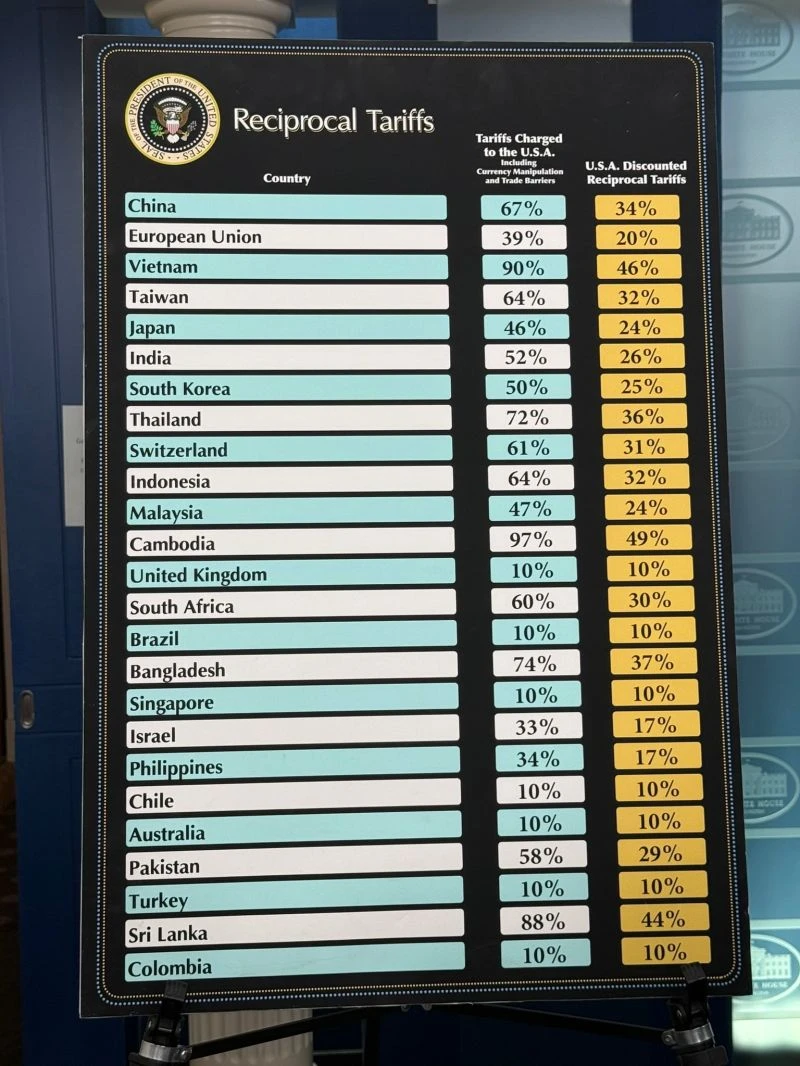
On April 2nd, the Trump administration announced reciprocal tariffs aimed at 50 countries and a baseline 10% tariff on all imports to the US. Here are the latest tariffs the US plans to levy against other countries.

Court Certifies Class Action for IEEPA Tariff Refunds
The Court of International Trade certified a class action that could expand IEEPA tariff refund access for importers with liquidated and finally liquidated entries.

How Many Customs Brokers Do You Need? Why a Single Broker is the Best Option
Do you really need multiple customs brokers? Find out how a single freight forwarding and customs brokerage provider saves you time and money.
New US Tariffs on Polysilicon and Solar Products: What Importers Need to Know
New U.S. tariffs on polysilicon and solar products take effect December 4, 2026. Learn the rates, exceptions, affected imports, and what U.S. importers need to know.

New US Tariffs on Canada: What Importers Need to Know About the White House's Latest Trade Actions
New U.S. tariffs on Canadian goods could reshape cross-border trade. See which products are affected, available exceptions, and what importers should do next.