- Home
- >
- News
- >
- Holiday Pause Masks January Price Pressure on China–US Lanes - TFX Update wk. December 22, 2025
Holiday Pause Masks January Price Pressure on China–US Lanes - TFX Update wk. December 22, 2025
The Lead:
Global trade policy developments reflected a continued tension between protectionist measures and trade-liberalizing initiatives. China escalated trade frictions with the European Union by imposing provisional anti-subsidy tariffs on EU dairy products, a move widely viewed as retaliatory amid broader disputes over industrial subsidies. At the same time, several countries pursued deeper trade integration: Indonesia signed a free trade agreement with the Eurasian Economic Union, while India and New Zealand concluded a comprehensive FTA aimed at reducing tariffs and significantly expanding bilateral trade.
In the US, trade policy remained active on multiple fronts, with plans announced for future tariffs on Chinese semiconductor imports and ongoing legal challenges to existing tariff authorities underscoring domestic debate over executive power in trade matters. The European Union also extended its sanctions regime against Russia, maintaining trade and economic restrictions tied to geopolitical considerations. Overall, the period was characterized by a complex mix of escalating trade disputes, strategic use of tariffs, and renewed momentum for bilateral and regional trade agreements.
This Week’s Ocean, Air & Freight Markets
China-US Ocean Freight Market:
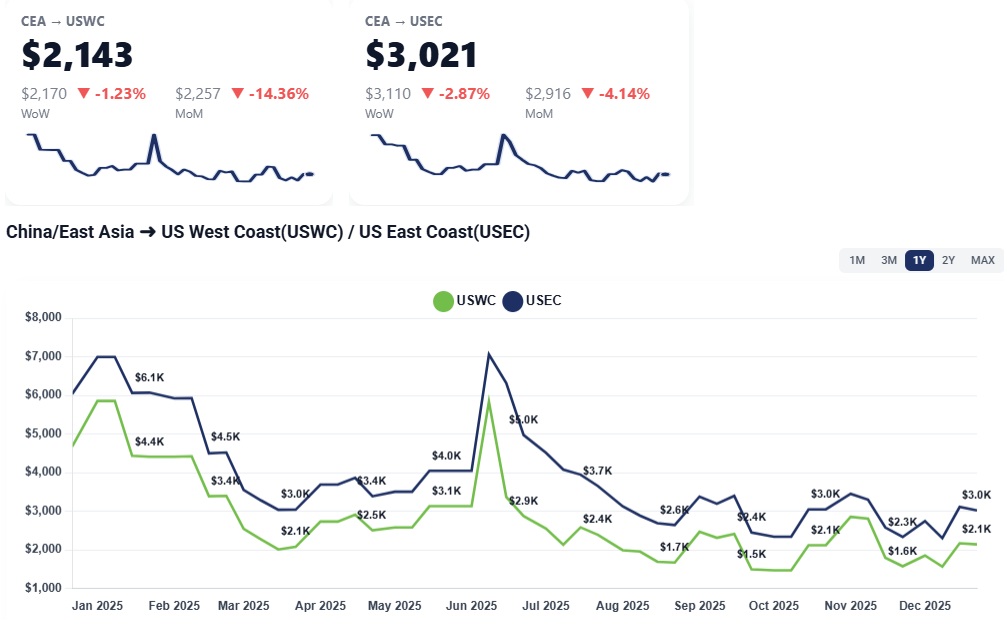
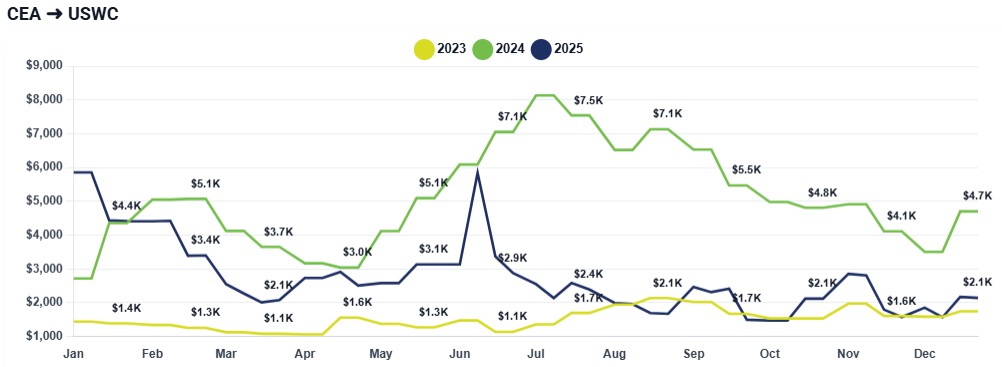
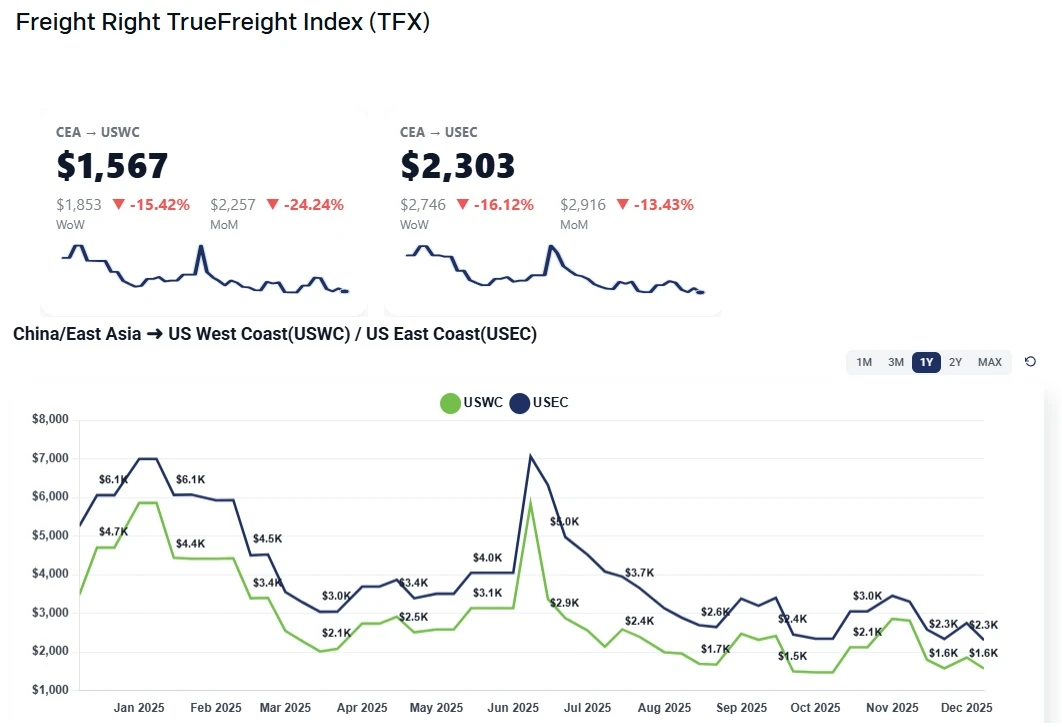
CEA to USWC (China to US West Coast): Rates were effectively flat week-over-week, holding in the $1,800–$2,000 per FEU range. With holiday shutdowns across shipper and carrier offices, there was little incentive for carriers to adjust pricing further, even as volumes dropped to near-zero levels late in the week
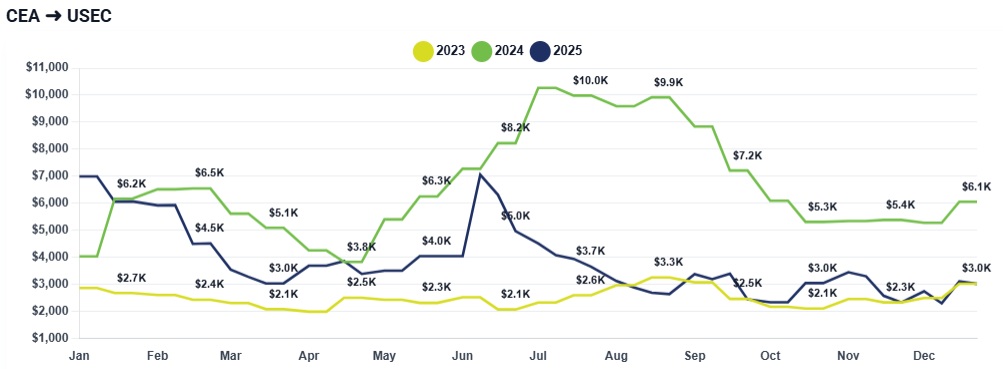
CEA to USEC (China to US East Coast): Similarly, East Coast rates remained steady, hovering around $2,700–$2,800 per FEU, unchanged from last week. Carriers appear content to maintain current levels through year-end rather than discount into a market with minimal demand.
Read more about the state of the ocean freight spot market with Freight Right’s TrueFreight Index.
This Week Explained:
Holiday-driven demand freeze: With Christmas week underway, shippers largely paused bookings. As noted in the discussion, “there’s no shipments, there’s no volume,” limiting any real market movement.
Carrier discipline despite low volumes: Even with empty pipelines, carriers avoided rate cuts. Lowering prices by several hundred dollars would not stimulate demand during the holidays, so holding firm was the rational play.
Late-December price stabilization: Small adjustments earlier in December are now done. Rates are expected to stay stable through the final sailings of the year rather than see last-minute volatility.
January GRI expectations already shaping sentiment: Market participants are focused less on this quiet week and more on January 1–2 GRIs, widely expected to be announced around $1,000, even if partially rolled back shortly after.
Looking Ahead:
The calm seen this week is unlikely to last. January shipments are expected to be meaningfully more expensive, with carriers targeting higher spot levels early in the month before Chinese New Year approaches. While some post-GRI mitigation is likely, the broader strategy appears to be holding rates firm into contract season in March-April, supported by seasonality and carrier pricing discipline. Space is not expected to be a constraint, but price pressure will be front and center as 2026 begins
In the News:
Reuters: US plans to impose tariffs on Chinese chips in mid-2027, USTR says
https://www.reuters.com/world/china/us-impose-tariffs-chips-china-2025-12-23/
The New York Times: Businesses in Canada Navigate Trump’s Tariffs During the Busy Holiday Season
https://www.nytimes.com/2025/12/23/world/canada/canada-trump-tariffs-christmas.html
Reuters: Indonesia eyes US tariff deal signing in January, says all issues settled
https://www.reuters.com/world/asia-pacific/indonesia-chief-tariff-negotiator-says-all-substantial-issues-settled-with-us-2025-12-23/
Global Trade Magazine: US Threatens European Tech Firms in Trade Dispute Over EU Regulations
https://www.globaltrademag.com/us-threatens-european-tech-firms-in-trade-dispute-over-eu-regulations/
ABC News: India accelerates free trade agreements to counter US tariffs and expand exports
https://abcnews.go.com/Business/wireStory/india-accelerates-free-trade-agreements-counter-us-tariffs-128510341
More News
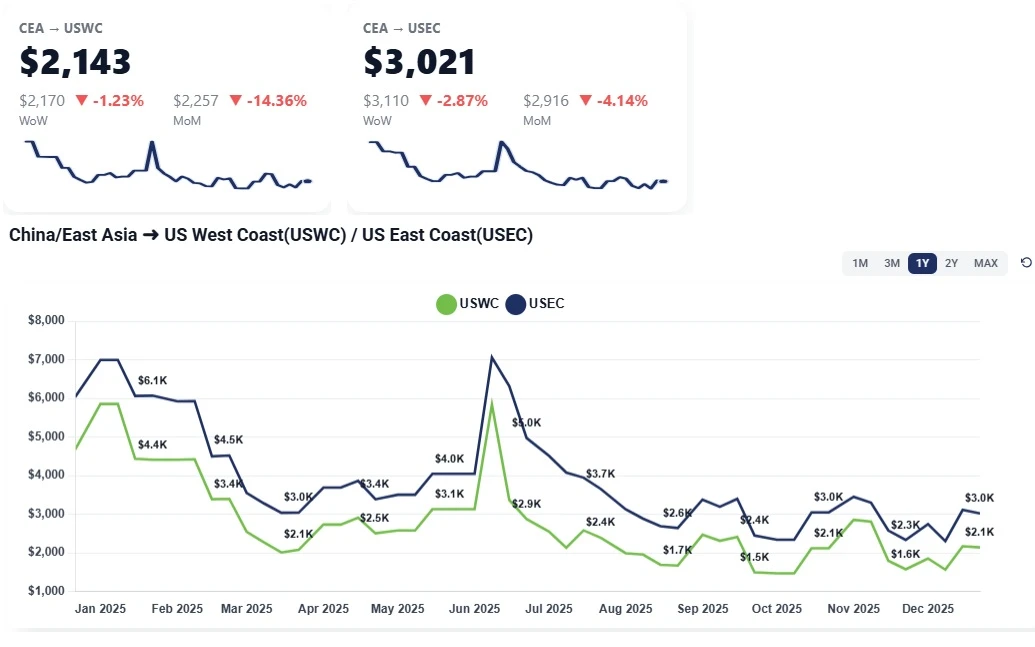
China–US West and East Coast Rates Hold Flat After Short-Lived December Rate Spike - TFX Update wk. December 1, 2025
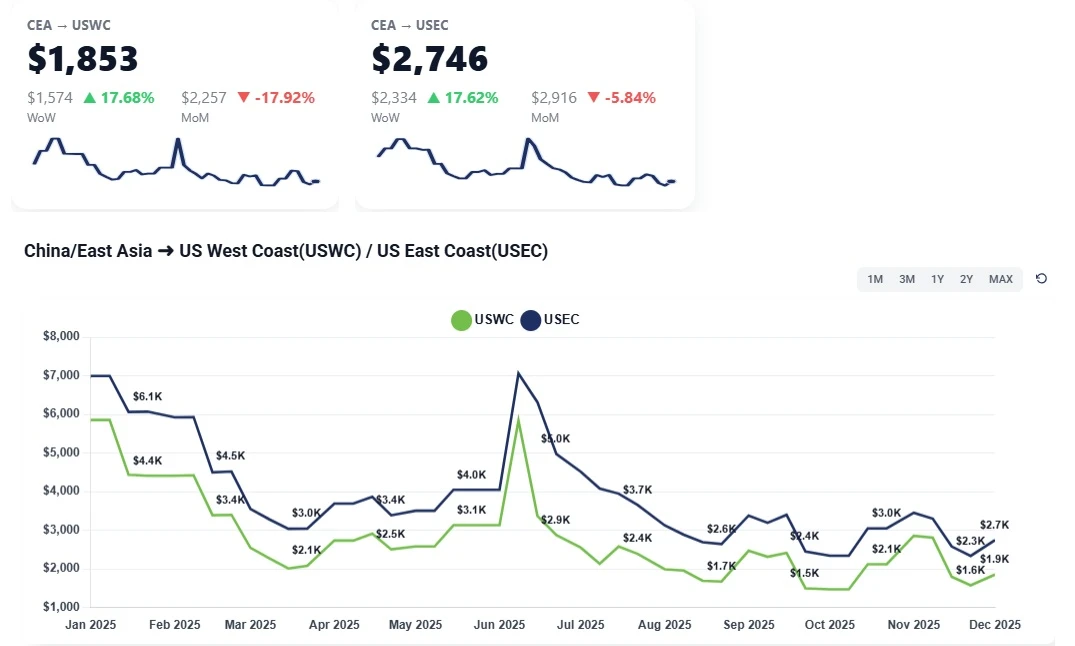
Weekly ocean freight update on China–US West and East Coast lanes as an early December GRI fades, leaving spot rates near November levels amid weak demand.
Ocean Freight Rates Hold Firm as Carriers Defend Pricing Into 2026 Contract Season - TFX Update wk. December 29, 2025
Transpacific ocean freight rates from China to the US West and East Coasts remained elevated week over week as carriers held firm through the holiday slowdown, positioning pricing ahead of Chinese New Year and upcoming contract season negotiations.
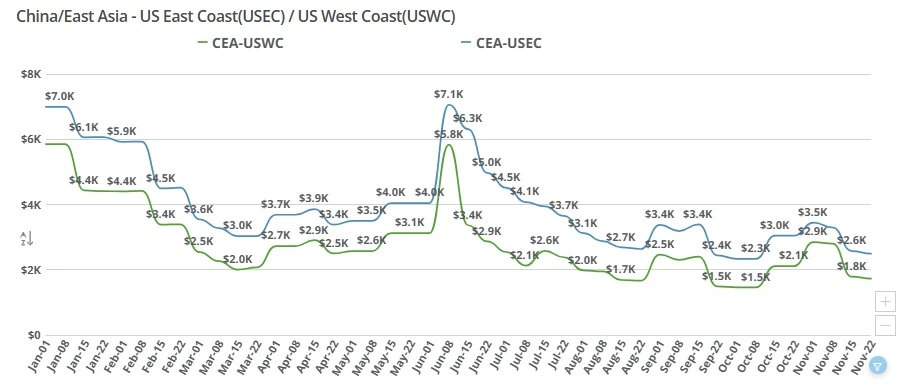
Spot Rates Plunge on Both Coasts With Short Holiday Week and Weak Imports - TFX Update wk. November 24, 2025
Transpacific ocean freight rates dropped sharply this week as weak import demand and the Thanksgiving holiday slowdown pushed China–US West and East Coast spot prices to new lows. Get the latest market drivers and outlook.

Carriers Push Back with GRIs, but Market Fundamentals Push Harder - TFX Update wk. January 12, 2026
China–US ocean freight rates fell week-over-week as weak January demand erased early GRIs. See what’s driving transpacific pricing and where rates may head next.
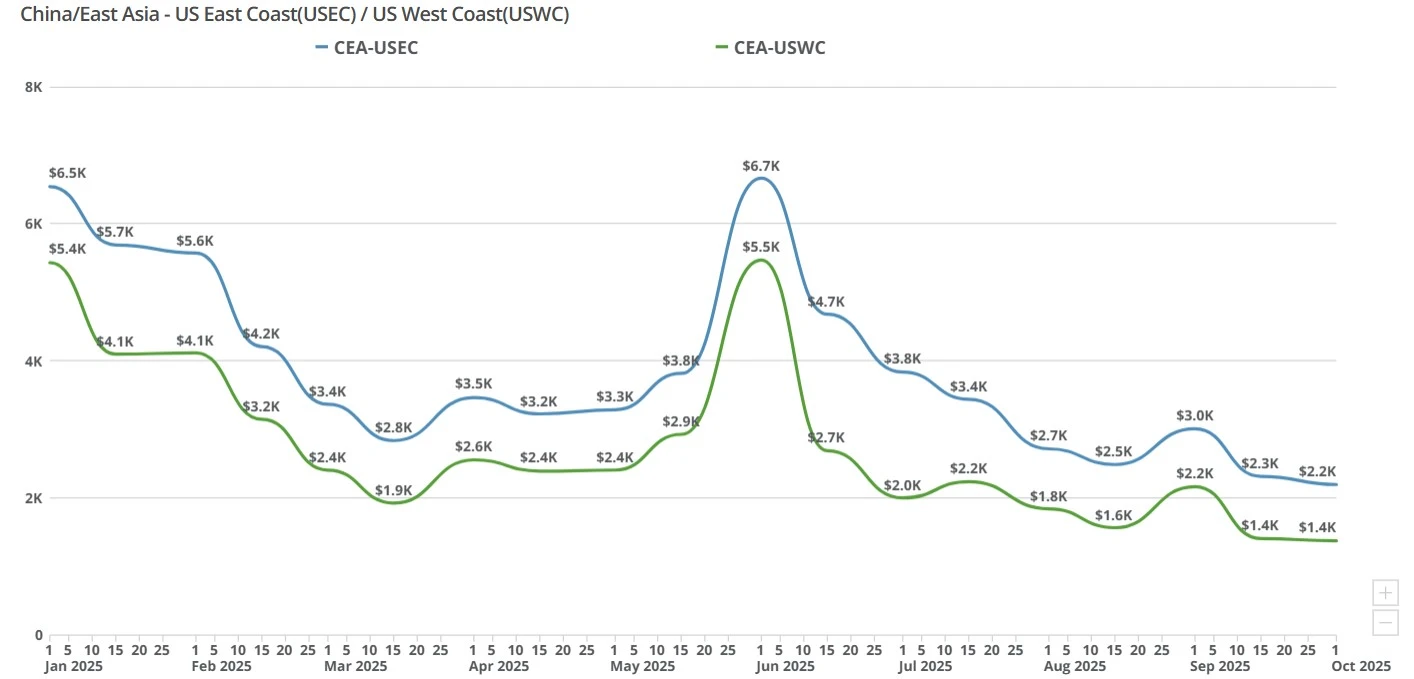
Flat Week for Ocean Freight as China’s Golden Week Pauses Trade Flows - TFX Update wk. October 6, 2025
China-U.S. freight rates stayed flat this week as Golden Week factory closures paused bookings and kept ocean freight markets calm.
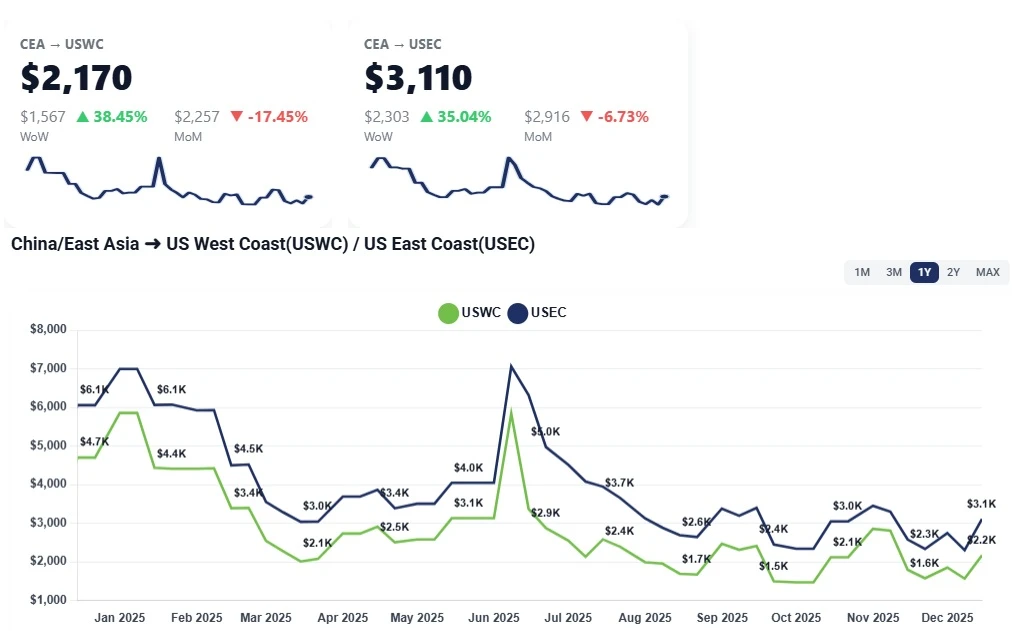
Transpacific Rates Pop Again: Carriers Push Mid-December Increases Into January - TFX Update wk. December 15, 2025
China–US ocean freight rates rose WoW: USWC near $2.1K/FEU and USEC near $2.9–$3.0K as carriers end fixed extensions and hold firm into January.
China–US Spot Market Stabilizes After November Plunge, But Gains Remain Fragile - TFX Update wk. December 8, 2025
Small December GRIs lift China–USWC and China–USEC rates slightly, but overcapacity, soft demand, and tariff uncertainty continue to cap meaningful recovery. Outlook steady through Chinese New Year with brief January strength.

Carriers Prepare August GRIs Following Sharp West Coast Rate Decline - TFX Update wk. July 27, 2026
China to US ocean freight rates declined again this week, led by sharp drops on West Coast routes while East Coast pricing remained relatively resilient. Learn what's driving the market correction, August rate increases, and what to expect as peak shippin

Last-Minute Sailing Cancellations Push April Cargo into May - TFX Update wk. April 20, 2026
Carriers use aggressive blank sailings to maintain China-US rates at $2,700, while shippers withhold volume in anticipation of a May price drop. Explore the impact of fuel surcharges and booking rolls on your supply chain.
CEA-USWC and USEC Rates Surge $800-$900 Amid Carrier GRIs - TFX Update wk. September 1, 2025
Ocean freight rates from China to the US spiked this week, with carriers testing higher levels before Golden Week. Importers weigh shipping now or waiting.