CBP Tightens Importer Requirements: What Businesses Must Do Before January 2027
U.S. Customs and Border Protection is changing how businesses establish their eligibility to import goods into the United States. Its Strengthening Customs Enforcement initiative targets importer accountability, inaccurate registration information, duty evasion, and gaps in supply chain transparency. The initiative follows Executive Order 14411, signed June 3, 2026, which directs broader changes to importer eligibility, disclosures, vetting, and enforcement.
Businesses face two immediate priorities: verify the importer information already on file with CBP and prepare for new foreign importer requirements taking effect January 5, 2027. The operational risk is straightforward. Incorrect account information or an ineligible filing arrangement can prevent merchandise from entering the country.
What is changing?
CBP’s initiative combines measures already operating with additional requirements scheduled for implementation. Under an August 19 notice, enhanced enforcement of importer registration accuracy began September 18, 2026. CBP can immediately void an importer of record number when information submitted through Form 5106 is inaccurate or incomplete. A voided number becomes invalid for importing merchandise.
The next major change comes from CBP’s November 6 interim final rule, Heightened Requirements for Foreign Importers of Record. Effective January 5, 2027, foreign importers must be validated under the Customs Trade Partnership Against Terrorism, known as CTPAT, or designate a CTPAT-validated licensed customs broker to make entry.
These developments implement part of a larger enforcement agenda. The executive order also directs work on bonding, importer financial accountability, recurrent vetting, supply chain disclosures, and stronger enforcement. Businesses should track the implementing notices for each measure; the executive order’s broader instructions do not establish one uniform operational deadline for every reform.
Who is affected?
Foreign manufacturers, overseas sellers, nonresident importers, and businesses importing through foreign entities should review their arrangements first. U.S. importers and customs brokers also face verification responsibilities.
The new classification rules deserve particular attention. U.S. incorporation alone does not establish U.S. importer status. An entity must be organized under U.S. law, located in the United States, and satisfy either the qualifying beneficial ownership and control requirement or the alternative involving significant directly owned, unencumbered U.S. real property. An importer failing the applicable criteria is classified as foreign.
A foreign-owned U.S. subsidiary should therefore request a documented status review before assuming its existing brokerage arrangement remains suitable. Procurement and logistics teams should involve the people who maintain ownership, corporate, and financial records. Those documents may sit outside the department responsible for daily shipments.
U.S. buyers should also review supplier-managed import arrangements. Ask which entity appears as importer of record and which broker submits the entry. A purchase order promising delivered goods provides little operational protection if the supplier’s customs arrangement cannot support clearance.
What does this mean for affected businesses?
The most immediate consequence is potential entry rejection. CBP’s November 6 filing guidance identifies three new data fields covering U.S. importer status, whether a broker is acting on behalf of another party, and the principal on the power of attorney. CBP says its validation checks may reject entries and entry summaries beginning January 5 when applicable foreign importer or principal-identification requirements are unmet.
For shipment planning, treat eligibility verification as a task to complete before departure. An unresolved account or broker issue discovered after arrival can create scheduling problems and expose the shipment to additional storage and handling costs.
Domestic importers should also expect documentation requests. Brokers must verify a client’s qualification before declaring it a U.S. importer and retain verification records for five years. The rule allows eligible brokers to request delayed compliance with the new broker verification requirement, with full compliance expected by May 6, 2027. This limited relief should not be treated as a blanket postponement of the foreign importer entry requirements.
What should importers do now?
Review Form 5106 against current business records. Confirm the importer’s legal name, identification number, physical address, email, and telephone number. CBP specifies that contact information must belong to the importer. The physical address cannot simply be the address of a broker, freight forwarder, registered agent, or unrelated business service provider. Brokers must also hold a valid power of attorney executed directly with the importer.
Assign one employee to coordinate corrections and retain confirmation of what was submitted. Give that person a process for receiving updates when the business changes its address, ownership, or contact details. A one-time cleanup will provide limited value if routine corporate changes never reach the customs team.
Confirm the importer’s classification with its broker. Request a written explanation of which qualification applies and what supporting records are needed. Provide documents through a secure channel. Resolve inconsistencies between corporate records, brokerage onboarding information, and the importer profile before the next shipment requires attention.
Verify the proposed CTPAT pathway. A foreign importer should ask its broker to confirm its validated status and ability to handle the account under the January requirements. If a change is needed, begin onboarding promptly. Obtain a checklist covering authorization documents, account setup, shipment instructions, and responsibility for pending entries.
Review shipments crossing the implementation date. Build a list of cargo expected to require entry around January 5. Include supplier, importer entity, broker, estimated arrival, and outstanding verification tasks. Give each unresolved item an owner and completion date. Prioritize shipments where production commitments or customer delivery dates leave little flexibility.
Prepare for further enforcement changes. The executive order directs increased attention to undervaluation, misclassification, illegal transshipment, and forced labor enforcement. Review whether the business can retrieve the records supporting its declarations. Ask suppliers for missing information early, and establish an escalation process when documents conflict. Complete importer verification before cargo moves, then keep the supporting records current as the business changes.
More News

Freight Right Reaches the Top in the Valley
Freight Right Global Logistics was among some of LA’s most prominent family businesses to be honored by the San Fernando Valley Business Journal on Oct. 29, ranking #8 for “Top 50 Most Influential Family-Owned Businesses” in the county.
Carriers Cut Rates at Month-End, Importers Scramble to Book Before GRI - TFX Update: wk. August 25, 2025
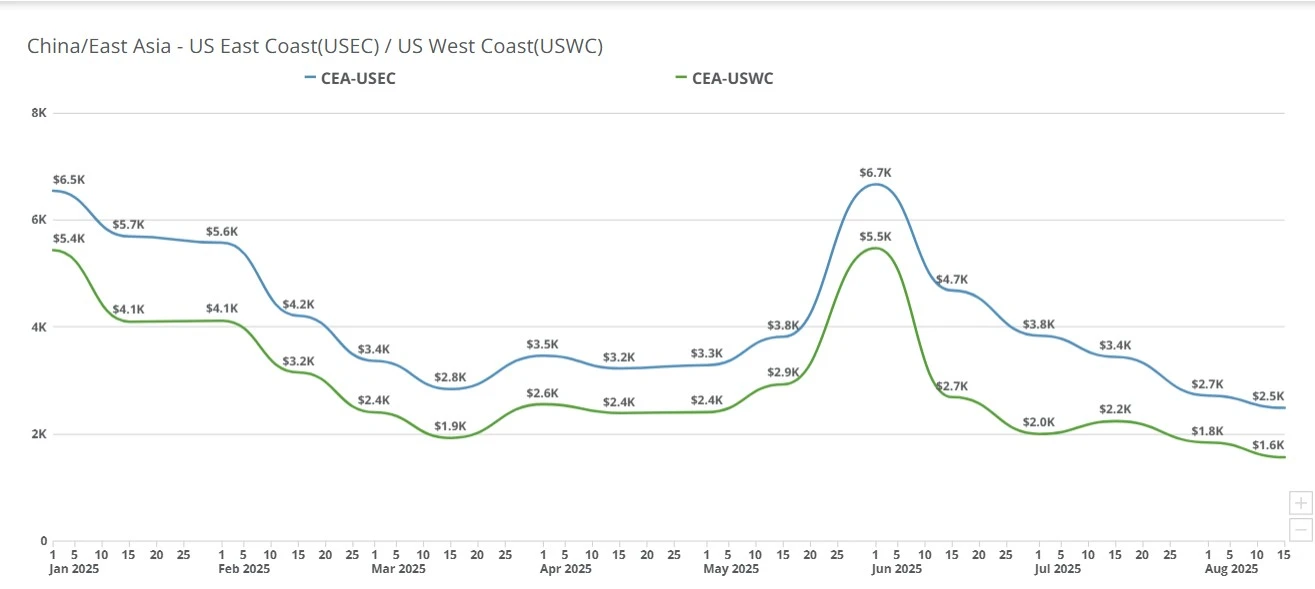
China–US freight rates drop again: $1,400 to West Coast, $2,300 to East Coast, as carriers cut prices before September hikes.

Watch Freight Right's Robert Khachatryan Talk Big & Bulky Ecommerce and Fulfillment With Beyond the Cart's Kyle Hamar
Big and bulky fulfillment doesn’t have to block global growth. Learn how ecommerce brands can ship oversized products internationally with real-time freight rates, duty-paid delivery, and zero foreign inventory.

Trump’s Customs Enforcement Order Raises the Bar for Importers - and That May Be a Good Thing
President Trump’s customs enforcement executive order targets foreign importers of record, weak bonding, duty evasion, undervaluation, and supply-chain opacity. Here’s what small and mid-sized importers should know.

IEEPA Tariff Refund Update: CBP Reports $35.46B in Refunds
CBP’s latest IEEPA tariff refund update shows $35.46B in anticipated refunds and interest. Learn what importers should do now to claim eligible refunds.

Carriers Prepare August GRIs Following Sharp West Coast Rate Decline - TFX Update wk. July 27, 2026
China to US ocean freight rates declined again this week, led by sharp drops on West Coast routes while East Coast pricing remained relatively resilient. Learn what's driving the market correction, August rate increases, and what to expect as peak shippin

Silence Before the Storm: Transpacific Market Braces for Chinese New Year Shutdown - TFX Update wk. January 26, 2026
Ocean freight rates from China to the US hit new lows as Chinese New Year approaches. With USWC rates falling to $1,600 and carriers selling space at cost, discover what's driving the market downturn and the outlook for February 2026
Ocean Spot Rates Rise $700–$900; Air Freight Climbs on Apple Charters and Tariff Rush - TFX Update wk. October 13, 2025
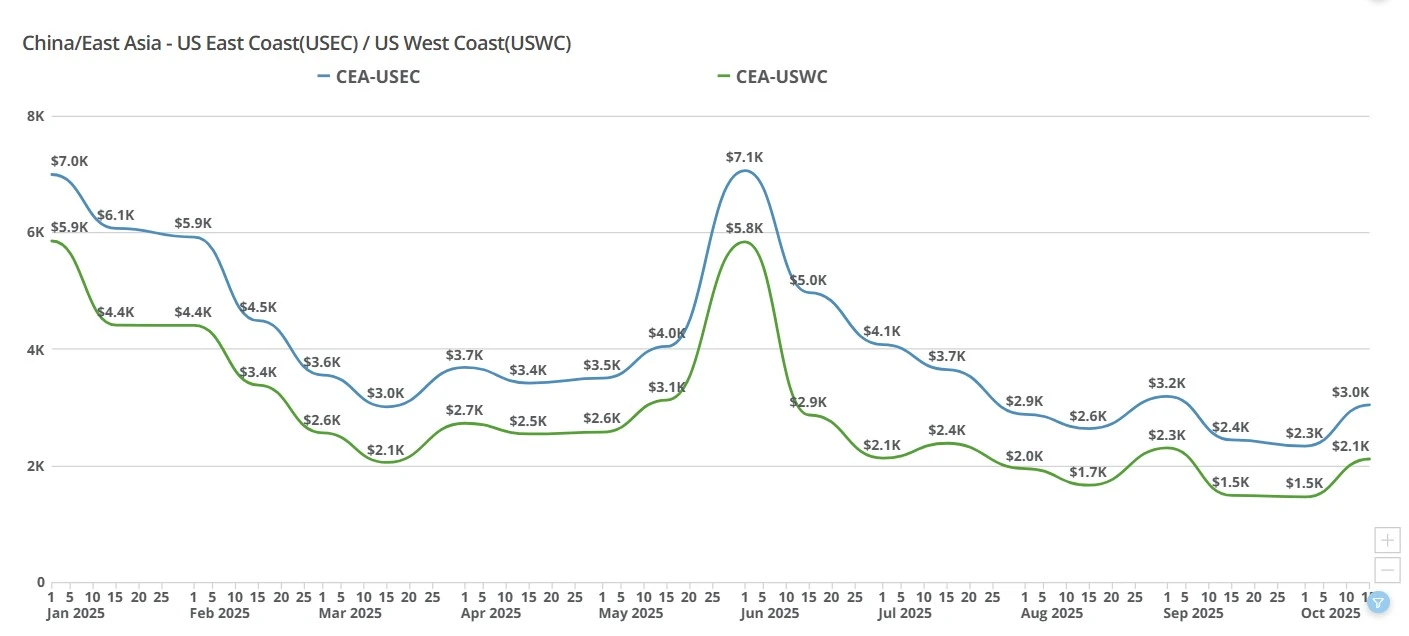
Transpacific ocean and air rates jump as carriers pull capacity, Apple charters tighten space, and shippers rush to beat U.S. tariff deadlines

ILA 2024 Strike: What Ports Are Affected & More
The International Longshoremen's Association began their strike October 1, 2024, affecting ports running along the east coast and Gulf regions of the United States. See what ports are affected and what this strike can mean for shippers.

Importers Race Against July Tariff Deadlines, Throwing Supply Chains Into Chaos - TFX Update wk. June 8, 2026
Ocean freight rates skyrocket past $6,000 to USWC and $7,000 to USEC. Discover how carrier blank sailings, space deficits, and tariff front-loading are driving this early peak season crunch.