- Home
- >
- News
- >
- Trump’s Customs Enforcement Order Raises the Bar for Importers - and That May Be a Good Thing
Trump’s Customs Enforcement Order Raises the Bar for Importers - and That May Be a Good Thing
On June 3, 2026, President Donald Trump signed an executive order titled "Strengthening Customs Enforcement." The order directs the Department of Homeland Security and U.S. Customs and Border Protection to tighten enforcement around importers of record, foreign importers, customs bonds, broker diligence, supply-chain disclosures, penalties, and duty evasion. In practical terms, it is a broad attempt to make sure that the party bringing goods into the United States is identifiable, financially accountable, and reachable when duties, penalties, or compliance questions arise.
For small and mid-sized importers, this change will likely mean more scrutiny, more documentation, and less tolerance for informal or loosely managed import processes. But it may also help level a playing field that has tilted for too long toward bad actors, shell importers, under-bonded foreign sellers, and companies that use weak paperwork or opaque supply chains to avoid the costs compliant businesses already pay.
What the executive order does
The order is an enforcement directive.
Its central target is the importer of record, or IOR. The IOR is the party legally responsible for entering goods into the United States, paying duties, providing accurate classification and valuation information, and complying with customs and trade laws.
The White House says the order directs DHS and CBP to strengthen IOR requirements by increasing bonding requirements, requiring IORs to maintain a minimum level of tangible domestic assets or bonding, imposing heightened requirements on foreign IORs, authorizing only U.S. IORs to file informal entries, creating a “good standing” requirement, and increasing vetting for parties involved in importing goods.
The executive order gives CBP 180 days to revise importer eligibility regulations, guidance, and policies. Those revisions are expected to include higher bond coverage, required disclosures around ownership and business affiliations, anticipated import volumes, and proof that the importer has enough domestic assets or bonding to satisfy customs obligations.
That matters because customs enforcement depends on accountability. If CBP cannot identify the real importer, cannot verify where goods came from, cannot collect duties owed, or cannot enforce penalties against a party with assets in the United States, the system becomes easy to exploit.
The biggest change: foreign importers face a harder path
One of the most important parts of the order is its treatment of foreign importers of record.
The order directs CBP to prohibit foreign IORs from filing informal entries. Informal entry is generally a simplified process used for lower-value shipments. For years, foreign sellers and e-commerce operators have been able to use low-value shipment channels in ways that made enforcement more difficult, especially when the seller had little or no U.S. presence.
The order also directs CBP to impose heightened requirements on foreign IORs that file formal entries. These may include limits on continuous bonds, use of single-transaction bonds, CTPAT validation, or working through CTPAT-validated licensed customs brokers.
The order signals that access to the U.S. market will increasingly require a real accountable party, not just a name on an entry form.
That is a major shift for foreign sellers, marketplace vendors, offshore e-commerce operators, and any business model built around moving high volumes of goods into the United States while keeping the importer, supplier, and financial responsibility outside easy reach of U.S. enforcement.
What "good standing" means for importers
The order also directs CBP to create a "good standing" requirement for importers of record.
That could become one of the most consequential parts of the policy. The order says importer status should be tied to compliance history, payment of duties and penalties, and whether the importer or its affiliates have been involved in customs violations, contraband, fentanyl trafficking, forced labor issues, or other serious compliance problems.
For legitimate businesses, this creates a stronger incentive to maintain clean records. For repeat offenders, it raises the possibility that customs problems will not remain isolated to one shipment. A poor compliance record could affect future import privileges.
For small and mid-sized importers, this makes customs compliance more cumulative. A sloppy classification process, weak supplier documentation, unpaid bills, poor broker oversight, or repeated corrections may carry more weight over time.
More supply-chain disclosure is coming
The executive order also directs DHS and CBP to establish new disclosure and certification requirements designed to fight duty evasion and supply-chain noncompliance.
The order specifically points to information about products, production methods, supply chains, foreign tax identifiers, foreign business identifiers, and documents submitted to foreign customs authorities. It also emphasizes enforcement around forced labor, country of origin, origin marking, intellectual property, revenue collection, and product safety.
This is where the order becomes more than an importer registration issue. It is also a supply-chain visibility issue.
Importers may be expected to know more about who made their products, where they were made, how they were made, whether the declared origin is accurate, whether the value is defensible, and whether the shipment implicates forced labor, sanctions, antidumping or countervailing duties, or illegal transshipment.
For businesses that already maintain good supplier files, purchase records, origin documentation, product specifications, and classification notes, this is manageable. For businesses that rely on vague supplier invoices, copied HTS codes, or "the factory handles that" explanations, the risk profile changes.
Penalties may become harder to reduce
The order also raises the enforcement stakes.
The White House fact sheet says the order directs DHS and CBP to increase enforcement of existing customs laws, including by establishing a 50% minimum penalty floor that limits CBP’s discretion to reduce assessed penalties for importers that violate customs laws.
The order also calls for less mitigation for repeat offenders, stronger collection of liquidated damages, more audits, more transparency, and stronger consequences for parties involved in noncompliant imports.
This matters because many importers have historically treated customs errors as fixable after the fact. That may become a more expensive assumption. If CBP is directed to reduce mitigation flexibility, especially for repeat offenders, importers will have stronger incentives to prevent mistakes before entry rather than clean them up later.
Who will be impacted?
The most immediate impact will likely fall on foreign importers of record, foreign sellers, high-volume e-commerce shippers, marketplace sellers, low-value shipment operators, and companies using thin U.S. entities or weak bonding structures to bring goods into the country.
But the order will also affect U.S.-based importers.
Small and mid-sized importers may need to review whether their customs bonds are adequate, whether their importer records are current, whether their broker powers of attorney are properly managed, whether their ACE access is active, and whether they can support the classification, value, and origin of the products they import.
Importers that use foreign suppliers to “handle everything” should pay particular attention. The legal responsibility may not sit where the business owner assumes it sits. CBP’s reasonable care guidance has long made clear that the importer of record is responsible for using reasonable care when entering, classifying, and valuing merchandise and when providing information needed for CBP to assess duties and determine legal compliance.
What this means for small and mid-sized importers
For SMB importers, the order should be treated as a warning to professionalize import operations.
That does not mean every importer needs an in-house trade compliance department. But it does mean that importing can no longer be managed only through supplier emails, freight quotes, and customs entries that no one reviews.
At minimum, importers should know who is acting as importer of record on every shipment. They should know whether their customs bond is sufficient. They should understand how their products are classified. They should maintain documentation supporting country of origin. They should be able to explain how declared values were calculated. They should know whether assists, tooling, royalties, commissions, discounts, or related-party pricing affect the customs value.
They should also ask harder questions about their suppliers. Is the manufacturer the same as the seller? Where is the product actually produced? Are any materials sourced from regions or entities tied to forced labor risk? Is the declared origin based on actual production facts or simply what the supplier wrote on the invoice?
These are not theoretical questions. The executive order specifically identifies undervaluation, withheld information, duty avoidance schemes, forced labor, origin rules, product safety, and other customs enforcement concerns as part of the problem it is trying to address.
Why the change is good and overdue
Without question, the order will create more work for importers.
More disclosure, higher bonding, stricter IOR rules, and more aggressive enforcement will add complexity. Some importers will face higher costs. Some foreign sellers may need to restructure how they enter the U.S. market. Some brokers may become more cautious about the clients and shipments they represent.
But the broader principle is sound.
A customs system only works if the government can identify the real importer, collect duties owed, verify the facts behind the entry, and enforce penalties when the rules are broken. When foreign sellers, shell entities, or under-bonded importers can move goods into the United States without meaningful accountability, compliant companies are put at a disadvantage.
A U.S. importer that pays the correct duties, uses a licensed customs broker, maintains records, classifies products carefully, and responds to CBP requests is competing against companies that may be declaring lower values, obscuring origin, avoiding duties, or using low-value shipment channels to reduce scrutiny.
The Coalition for a Prosperous America praised the order as a major overhaul of importer accountability and specifically framed it as a crackdown on non-resident importers and weak bonding. Its argument is that foreign actors with little U.S. presence have been able to benefit from access to the U.S. market while avoiding the same level of accountability faced by U.S. importers and domestic producers.
That is the strongest case for the order. It rewards importers that already take compliance seriously and raises the cost of operating through opacity.
This is also about de minimis and low-value shipment abuse
The executive order should also be viewed in the broader context of U.S. efforts to tighten low-value import channels.
The White House fact sheet explicitly ties the order to prior actions on de minimis, including the administration’s suspension of the de minimis loophole and the permanent repeal of the statutory basis for the de minimis exemption worldwide, effective July 1, 2027.
For many small and mid-sized importers, this matters because the competitive landscape has been shaped by low-value imports, foreign e-commerce sellers, and marketplace models that do not always bear the same compliance burden as traditional importers.
If the U.S. is moving toward a system where more shipments require clearer importer accountability, stronger data, and better enforcement, then compliant importers may benefit over time. The short-term burden may be higher, but the long-term result could be a fairer market.
What importers should do now
The order’s requirements will not all take effect immediately. The White House fact sheet says DHS and CBP will generally work through the standard rulemaking process and that affected parties will have an opportunity to adjust operations.
Still, importers should not wait for final rules before reviewing their exposure.
A practical first step is to audit the importer-of-record structure. Confirm who is listed as IOR, who holds the bond, who has power of attorney, and who is legally responsible for the entry.
Next, review product classifications. HTS codes should not be copied blindly from suppliers, marketplaces, old entries, or competitor listings. Classification should be documented and defensible.
Importers should also review valuation. Declared value should reflect the full customs value, including any required additions such as assists, tooling, royalties, certain commissions, or other dutiable costs.
Country-of-origin support should be checked, especially for products sourced through multi-country supply chains. If goods are assembled in one country using inputs from another, the origin analysis may require more than simply relying on the supplier’s invoice.
Finally, importers should review their broker relationship. A good customs broker should be able to help identify weak points before CBP does. If an importer’s broker never asks questions, never reviews product data, and simply files whatever is sent over, that may become a larger risk in the enforcement environment this order is trying to create.
Import compliance is becoming a competitive advantage
The executive order reflects a broader shift in U.S. trade policy: importing into the United States is becoming more data-driven, more enforcement-heavy, and less tolerant of vague accountability. Companies that treat customs compliance as a core business function will be better positioned than companies that treat it as a shipping formality.
That is especially true for businesses importing high-value goods, regulated products, goods exposed to tariff actions, goods from complex supply chains, or products that may be scrutinized for origin, forced labor, or valuation issues.
Freight Right helps importers manage this environment by supporting customs brokerage, entry review, supplier coordination, classification and valuation questions, customs bond considerations, and broader import process controls. For importers that have grown quickly, changed suppliers, expanded product lines, or relied heavily on overseas partners to manage the import process, now is the time to review whether the compliance foundation is strong enough for the new enforcement environment.
The companies most exposed by this order are those that cannot clearly answer basic questions: who is the importer, where were the goods made, how was the value calculated, what duties are owed, and who is accountable if CBP disagrees?
For everyone else, the order may be inconvenient. But it is also a chance to compete on cleaner terms.
More News

New Executive Order Limits Tariff Stacking on Imports to Prevent Excessive Duties
President Trump issues Executive Order to stop overlapping tariffs on imports under national security and trade actions, ensuring duty rates remain targeted and non-cumulative. Effective retroactively from March 4, 2025.
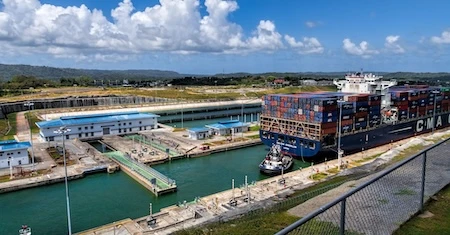
2023 Panama Canal Drought: What Small & Medium-Sized Shippers Need To Know
The Panama canal is experiencing lower water levels as a result of a drought exacerbated by El Nino. The results of this drought have implications for all sizes of shippers around the world but particularly for small to medium sized shippers that are in a
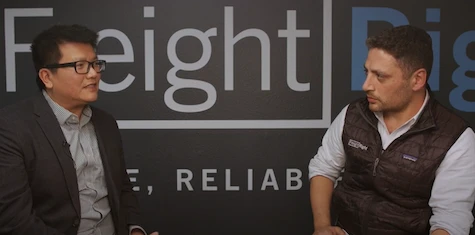
How To Fix The Supply Chain: Q&A
Founder & CEO of Freight Right Global Logistics, Robert Khachatryan, sat down with Tuck Ly, Vice President of Clearpoint International, to discuss the major issues affecting the global supply chain and port congestion

Watch Freight Right's Robert Khachatryan Talk Big & Bulky Ecommerce and Fulfillment With Beyond the Cart's Kyle Hamar
Big and bulky fulfillment doesn’t have to block global growth. Learn how ecommerce brands can ship oversized products internationally with real-time freight rates, duty-paid delivery, and zero foreign inventory.
Last-Minute Sailing Cancellations Push April Cargo into May - TFX Update wk. April 20, 2026
Carriers use aggressive blank sailings to maintain China-US rates at $2,700, while shippers withhold volume in anticipation of a May price drop. Explore the impact of fuel surcharges and booking rolls on your supply chain.
Blank Sailings and Rollovers Dominate May Freight Market - TFX Update wk. May 4, 2026
China-US rates remain stable at $2,700-$3,800, but blank sailings and vessel overloading are causing record shipment rollovers and strategic rerouting through Busan.
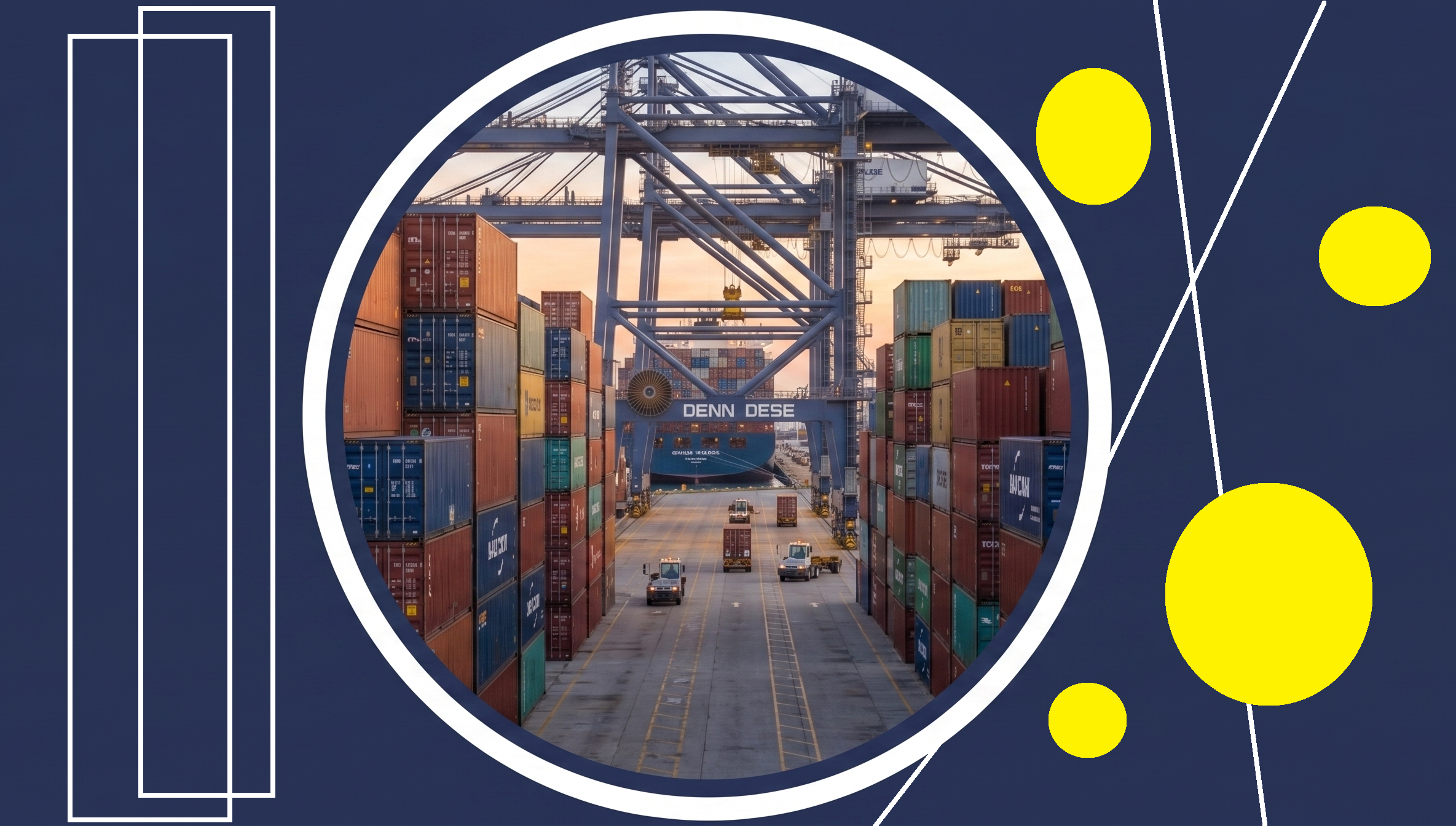
US East Coast Freight Targets $4,500 Threshold - TFX Update wk. May 11, 2026
China to US rates surge toward $4,500 as carriers implement mid-month hikes. Learn how post-holiday demand, IEEPA refunds, and shifting air freight trends are redefining Trans-Pacific logistics strategies.
Where have all the truckers gone and how do we get them back?
The amount of truckers is dwindling and it is not good news for the freight industry. Why is this happening and what are the long and short term solutions?
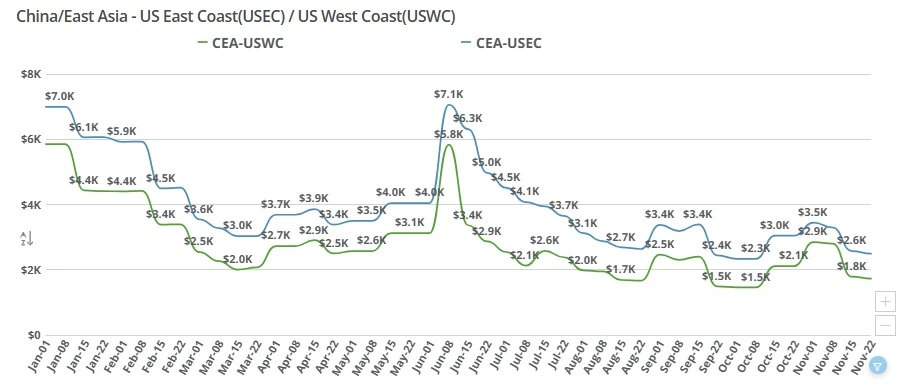
Spot Rates Plunge on Both Coasts With Short Holiday Week and Weak Imports - TFX Update wk. November 24, 2025
Transpacific ocean freight rates dropped sharply this week as weak import demand and the Thanksgiving holiday slowdown pushed China–US West and East Coast spot prices to new lows. Get the latest market drivers and outlook.
Executive Expands Tariff Powers, Streamlines Trade and Security Framework
In a 7–4 ruling on August 29, 2025, the US Court of Appeals found President Trump exceeded his authority under IEEPA by imposing broad reciprocal tariffs. The decision is stayed until Oct 14, giving the administration time to appeal to the Supreme Court.