- Home
- >
- News
- >
- New Trump Tariffs Take Effect: What Importers Need to Know About the Latest US Trade Measures
New Trump Tariffs Take Effect: What Importers Need to Know About the Latest US Trade Measures
The Trump administration has unveiled a new round of tariffs that will replace the temporary global duties previously imposed after the Supreme Court invalidated many of the administration's earlier tariff actions. Unlike the previous measures, these tariffs rely on a different legal authority intended to provide a stronger legal foundation and are scheduled to take effect as the earlier temporary tariffs expire.
For importers, manufacturers, retailers, and logistics providers, the latest announcement represents another major shift in US trade policy. While the tariff rates are generally lower than many of the reciprocal tariffs announced earlier in the year, they apply broadly across US trading partners and introduce new compliance considerations.
Today’s new tariffs are in addition to the Trump administration’s announcement of a separate escalation of its trade dispute with Canada earlier this week. Through three presidential proclamations issued under Section 338 of the Tariff Act of 1930, the White House imposed 50% tariffs on a wide range of Canadian goods in response to what it describes as Canada's discriminatory treatment of U.S. dairy products, alcoholic beverages, and motor vehicles.
What Is Being Tariffed?
The new policy applies broadly to imported goods originating from approximately 60 US trading partners that together account for roughly 99% of all US imports. Rather than targeting a single industry or product category, the tariffs are country-based and apply to most imported merchandise unless specifically exempted or already covered by separate tariff programs.
The administration says the tariffs are designed to address countries that fail to adequately prevent goods made with forced labor from entering global supply chains. According to the US Trade Representative, the investigation concluded that many foreign governments have not taken sufficient action to eliminate forced labor practices affecting international trade.
Because these tariffs apply across entire countries rather than narrow product lists, importers should expect the duties to affect a wide variety of consumer goods, industrial products, machinery, apparel, electronics, furniture, and manufacturing inputs unless a specific exclusion applies.
How Are These Tariffs Getting Implemented?
One of the biggest questions surrounding the announcement is why the administration believes these tariffs can survive legal scrutiny after the Supreme Court struck down many earlier tariff actions that relied on the International Emergency Economic Powers Act (IEEPA).
This time, the administration is relying primarily on Section 301 of the Trade Act of 1974, a long-established trade statute that authorizes the United States Trade Representative (USTR) to investigate and respond to foreign acts, policies, or practices that burden or restrict US commerce. Section 301 has historically been used in major trade actions, including tariffs imposed against China beginning in 2018.
The administration conducted a Section 301 investigation focused on forced labor enforcement before announcing the new tariffs. Because Section 301 specifically authorizes trade remedies following an investigation, many trade observers believe it provides a significantly stronger legal foundation than the emergency authorities used previously.
This distinction is important for importers because it suggests the administration has attempted to redesign its tariff strategy to withstand future court challenges.
How Much Are the Tariffs?
The new tariff schedule creates two primary rates.
10% tariff
Countries that have implemented anti-forced labor laws or that the administration considers to have made meaningful progress in combating forced labor will generally be subject to a 10% tariff.
This group reportedly includes trading partners such as:
Canada
Mexico
European Union member states
United Kingdom
Several other allied economies
12.5% tariff
Countries that the administration believes have not adopted sufficient forced labor protections will generally face a 12.5% tariff.
This higher rate reportedly applies to many major manufacturing economies, including:
China
Japan
Australia
Numerous additional Asian, African, and Latin American trading partners
The administration has also indicated that countries may receive lower tariff rates if they strengthen their labor laws or negotiate agreements with the United States addressing forced labor concerns.
What Goods and Industries are Exempt from these New Tariffs?
Although the tariffs are broad, they are not universal.
Several categories of imports are expected to remain exempt or continue to be governed by existing trade programs.
Among the notable exceptions are:
Products already subject to separate Section 232 national security tariffs
Certain energy products, including oil and natural gas
Many fertilizer products
Some agricultural and food products
Goods qualifying for preferential treatment under the United States-Mexico-Canada Agreement (USMCA), where applicable
Reports also indicate that certain specialty commodities—including products such as coffee, diamonds, cork, roses, and rubies—may remain excluded under existing tariff treatment.
Importers should closely review official Harmonized Tariff Schedule updates and implementation guidance from USTR and US Customs and Border Protection (CBP) to determine whether specific products qualify for exclusions once implementation instructions are published.
Who Is Expected to Be Affected?
Importers
US importers will bear the immediate responsibility for paying the additional duties when merchandise enters the country.
Companies sourcing products from affected countries should review supplier relationships, landed cost calculations, and customs classifications before shipments arrive.
Manufacturers
Many US manufacturers rely on imported components and raw materials.
Higher import costs could increase production expenses for manufacturers using foreign steel, electronics, machinery, chemicals, textiles, or industrial inputs.
Retailers
Retailers importing finished consumer products—including apparel, electronics, furniture, home goods, sporting goods, and seasonal merchandise—may face higher acquisition costs that could eventually be reflected in consumer prices.
Logistics Providers
Freight forwarders, customs brokers, and supply chain providers should expect increased demand for tariff planning, customs compliance, country-of-origin verification, and sourcing advice as customers adjust to the new requirements.
Consumers
Although tariffs are assessed on imported goods rather than directly on consumers, economists generally note that some portion of higher import costs can be passed through supply chains in the form of higher retail prices, depending on market conditions and competitive pressures.
What Should Importers Do Next?
Businesses importing affected products should begin preparing now rather than waiting until shipments arrive.
Key steps include:
Identify all products sourced from countries covered by the new tariff schedule.
Review country-of-origin determinations to ensure compliance.
Calculate updated landed costs using the applicable 10% or 12.5% rate.
Determine whether products qualify for any available exclusions or preferential treatment, including USMCA where applicable.
Monitor guidance from USTR and CBP for implementation instructions, HTS updates, and customs filing requirements.
Evaluate whether supplier diversification or alternative sourcing strategies could reduce future tariff exposure.
Looking Ahead
The latest announcement demonstrates that the Trump administration intends to continue using tariffs as a central element of US trade policy while relying on legal authorities viewed as more durable following the Supreme Court's decision limiting earlier emergency-based tariffs.
Although these new duties generally impose lower rates than some previously proposed reciprocal tariffs, they affect nearly all major US trading partners and could reshape sourcing decisions across multiple industries. Importers should expect additional Section 301 investigations and potential future tariff actions, as administration officials have indicated further trade enforcement initiatives remain under consideration.
More News
New US Tariffs on Polysilicon and Solar Products: What Importers Need to Know
New U.S. tariffs on polysilicon and solar products take effect December 4, 2026. Learn the rates, exceptions, affected imports, and what U.S. importers need to know.

Supreme Court IEEPA Tariffs Ruling: What Importers Need to Know
The Supreme Court’s landmark IEEPA tariffs ruling strikes down major duties. Learn how this decision impacts Section 301 and 232 tariffs and how to claim refunds.

New US Tariffs on Canada: What Importers Need to Know About the White House's Latest Trade Actions
New U.S. tariffs on Canadian goods could reshape cross-border trade. See which products are affected, available exceptions, and what importers should do next.

IEEPA Tariffs Update: What Importers Need to Know Now (January 2026)
Each day the Supreme Court moves closer and closer to a ruling for or against the Trump administration's IEEPA tariffs. See what Baker Tilly's Pete Mento advises importers do to get ready for any out come, what the possible outcomes could be and more.
International Economic Emergency Powers Act (Reciprocal Tariffs Act): Everything Importers, Exporters & Consumers Need to Know
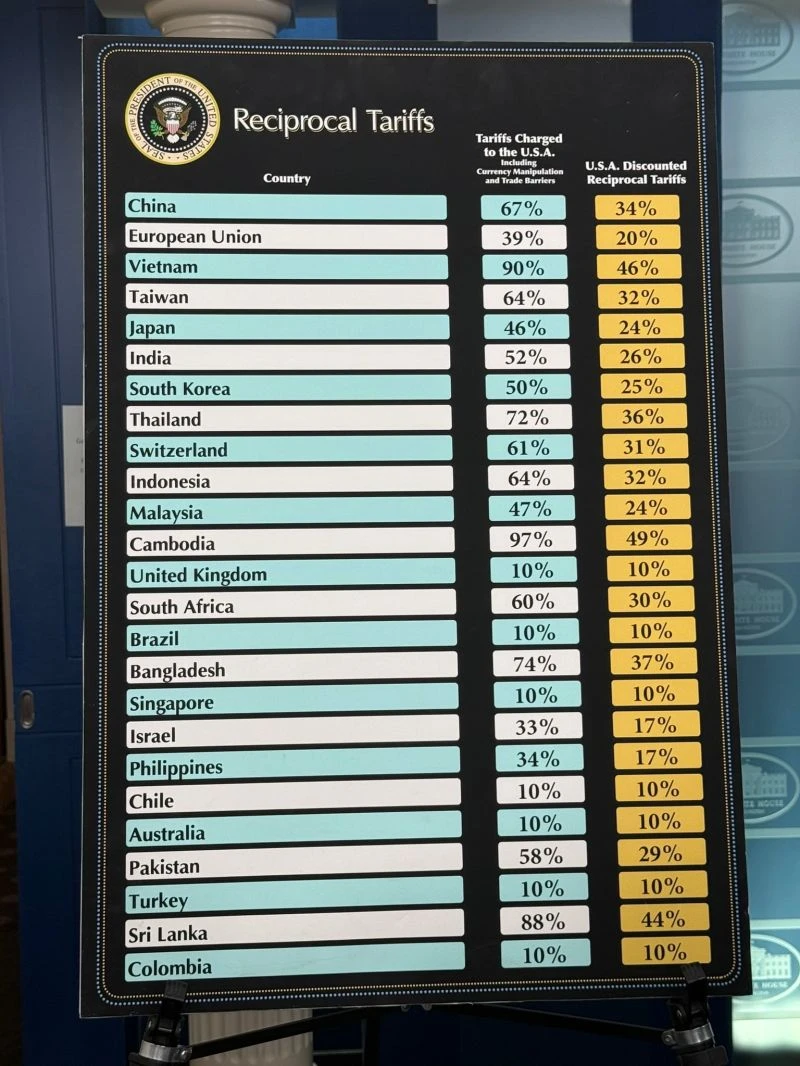
On April 2nd, the Trump administration announced reciprocal tariffs aimed at 50 countries and a baseline 10% tariff on all imports to the US. Here are the latest tariffs the US plans to levy against other countries.
Wait-and-See Grips Importers As Rates Remain Unchanged - TFX Update: wk. July 28st, 2025
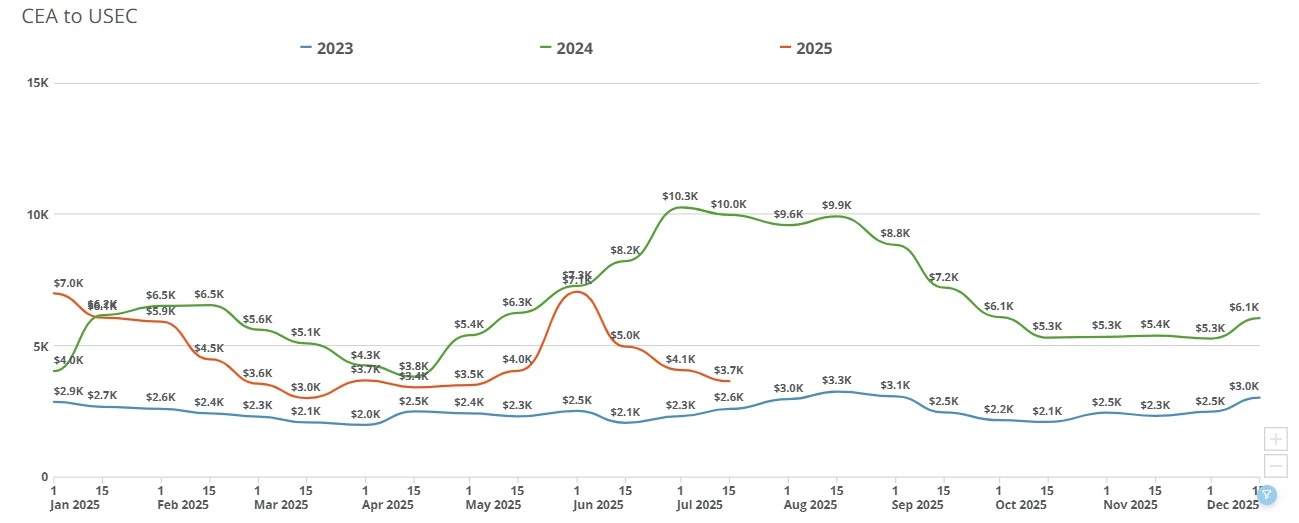
As the deadline before reciprocal tariffs take place, the Trump administration continues to make deals with nations around the world. Importers are back to taking a wait-and-see approach while rates USWC and USEC remain unchanged.

Executive Expands Tariff Powers, Streamlines Trade and Security Framework
In a 7–4 ruling on August 29, 2025, the US Court of Appeals found President Trump exceeded his authority under IEEPA by imposing broad reciprocal tariffs. The decision is stayed until Oct 14, giving the administration time to appeal to the Supreme Court.
The USTR Announces New Product Exclusions for Section 301 List 3 Tariffs
The May 21 product exclusion covers 103 separate exclusion requests
IEEPA Tariff Refund Update: CBP Reports $35.46B in Refunds
CBP’s latest IEEPA tariff refund update shows $35.46B in anticipated refunds and interest. Learn what importers should do now to claim eligible refunds.

Watch Freight Right's Robert Khachatryan Talk Big & Bulky Ecommerce and Fulfillment With Beyond the Cart's Kyle Hamar
Big and bulky fulfillment doesn’t have to block global growth. Learn how ecommerce brands can ship oversized products internationally with real-time freight rates, duty-paid delivery, and zero foreign inventory.