- Home
- >
- News
- >
- Last-Minute Sailing Cancellations Push April Cargo into May - TFX Update wk. April 20, 2026
Last-Minute Sailing Cancellations Push April Cargo into May - TFX Update wk. April 20, 2026
The Lead:
Last week was defined by a massive administrative rebalancing in the United States and a deepening war in global economic policy. The launch of the CAPE refund system represents a historic victory for US importers against executive overreach, yet this liquidity injection was immediately offset by the threat of a new 50% tariff on China over its alleged ties to Iran. This geopolitical tension was reflected in the IMF’s World Economic Outlook, which characterized the global economy as living in the shadow of war, with trade fragmentation and rising defense spending threatening to erase recent productivity gains. While the US focuses on reciprocity through its Section 122 surcharge, the EU and China are aggressively building alternative corridors, the former through tech deals with South Korea and the latter through tariff-free access for Africa, effectively creating a world of competing trade fortresses.
This Week’s Ocean, Air & Freight Markets
China-US Ocean Freight Market:
CEA to USWC: general market rates are holding at approximately $2,600 – $2,700 per FEU. However, special discounted rates are available for high-volume shippers, ranging between $2,100 and $2,200. Rates have remained largely stagnant compared to the previous week, though they represent a significant increase of $300 – $400 since the beginning of the month.
CEA to USEC: Rates are not explicitly quoted in dollar amounts, the lane is facing more severe operational challenges than the West Coast. Carriers are struggling to maintain the current $2,700 sticker price during this off-peak period, suggesting potential downward pressure on rates in the coming weeks despite aggressive capacity management.
Freight Right’s Lowest Rate indicators are finding that importers can find spot rates as low as $2,070 from China to US West Coast and $3,150 from China to US East Coast. Talk to your freight forwarder about options available to you.
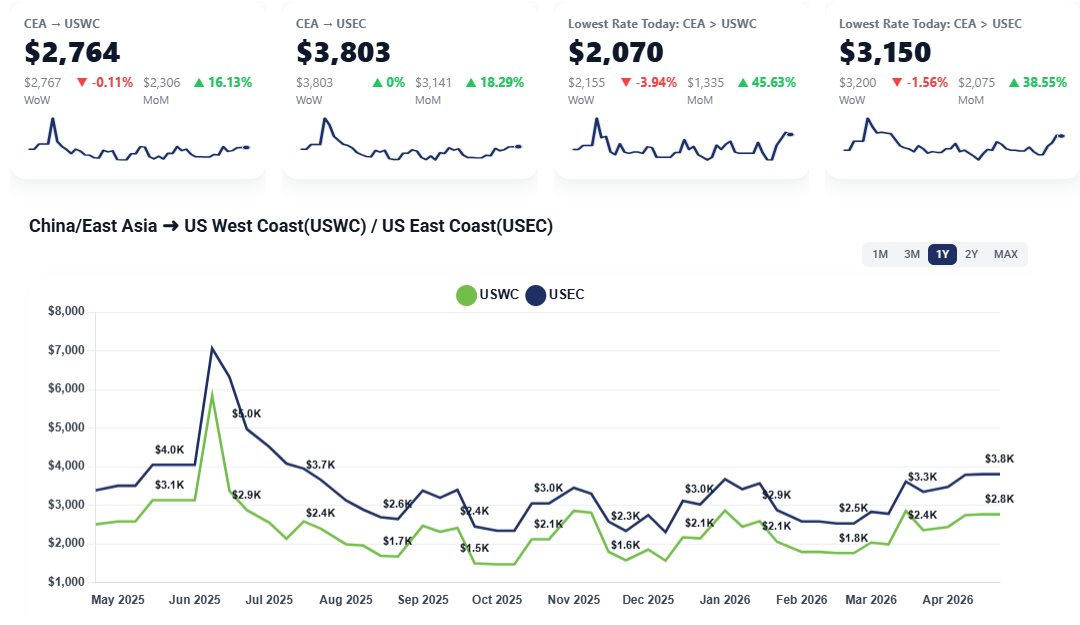
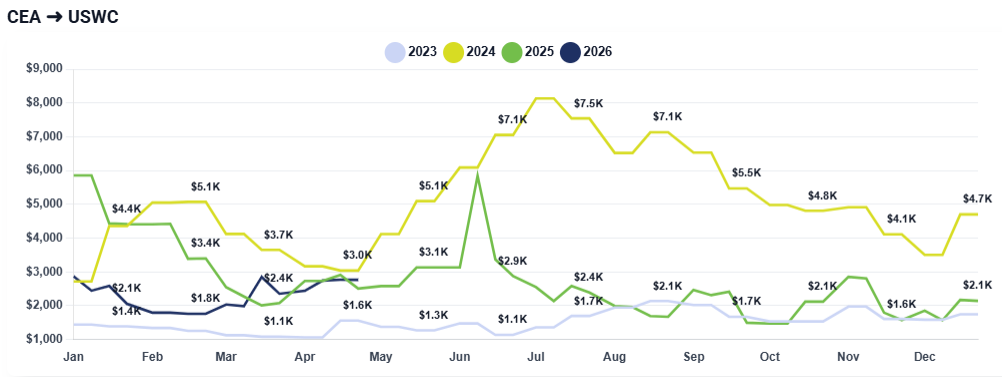
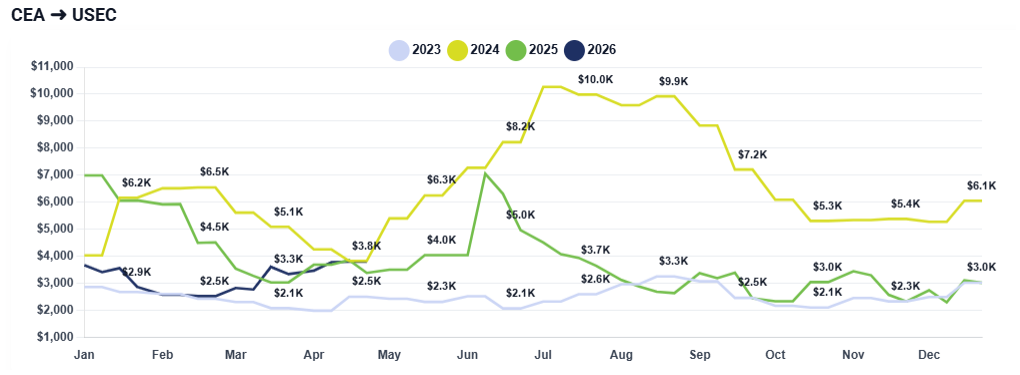
Read more about the state of the ocean freight spot market with Freight Right’s TrueFreight Index.
What Happened This Past Week
Increased Booking Rolls: There is a notable rise in "rolled" bookings, where cargo is pushed to later vessels due to the reduced number of active sailings.
Volatile Sailing Schedules: Schedules have become highly unreliable; in one instance, a scheduled sailing for the final week of April disappeared from carrier websites entirely, with the next available slot pushed to early May.
Shipper "Wait-and-See" Tactics: Many importers are withholding regular shipments, betting that current rate levels are unsustainable and will drop by May.
Downsized Urgent Cargo: For necessary shipments, customers are opting for smaller, more frequent batches to mitigate the high costs of both ocean and air freight.
Looking Ahead:
The outlook for the first half of May suggests a period of continued friction between carrier capacity management and low market demand. Carriers are expected to continue their strategy of limited capacity to defend the current rate floor, but this will likely be challenged by the ongoing off-peak slump.
As sailings are pushed into the first week of May, shippers should prepare for rate adjustments at the start of the new month. If volume does not pick up significantly, the gap between special discounted rates and official sticker prices may widen, eventually forcing a correction in general market rates. Shippers currently withholding cargo are likely to re-enter the market in early May, which could provide the volume necessary to stabilize these higher levels or, conversely, lead to further booking congestion if blank sailings persist.
In the News:
Bloomberg: Global Trade Policy Reacts Swiftly to Iran War Disruptions
https://www.bloomberg.com/news/newsletters/2026-04-16/trade-policies-introduced-to-counter-iran-war-fallout
New York Times: Trump Administration Takes Steps to Refund $166 Billion in Tariffs
https://www.nytimes.com/2026/04/20/us/politics/trump-administration-tariff-refunds.html
Financial Times: Are global trade imbalances just ‘one really big surplus’?
https://www.ft.com/content/30e59f44-647e-496d-a4fa-ac3595dcb6f2
Newsweek: Iran Issues New Threat to Further Destabilize Global Trade via Red Sea
https://www.newsweek.com/iran-new-threat-destabilize-global-trade-red-sea-11833027
CNN: The tariff refund process is finally kicking off
https://edition.cnn.com/2026/04/20/economy/tariff-refund-process-kicks-off
More News

Carriers Pivot to Weekly Rate Updates Amid Global Fuel Volatility - TFX Update wk. April 6, 2026
Ocean rates hit $2,700 as carriers implement $300 emergency fuel surcharges. Explore how geopolitical instability and weekly rate shifts are impacting China-to-US shipping lanes.
Space Tightens on China-US Routes Despite Weak Underlying Volume - TFX Update wk. April 13, 2026
Explore how aggressive blank sailings and new blended rate strategies are stabilizing CEA to USWC/USEC shipping costs despite weak demand. Stay informed on current ocean freight market updates and rate changes.

How To Fix The Supply Chain: Q&A
Founder & CEO of Freight Right Global Logistics, Robert Khachatryan, sat down with Tuck Ly, Vice President of Clearpoint International, to discuss the major issues affecting the global supply chain and port congestion
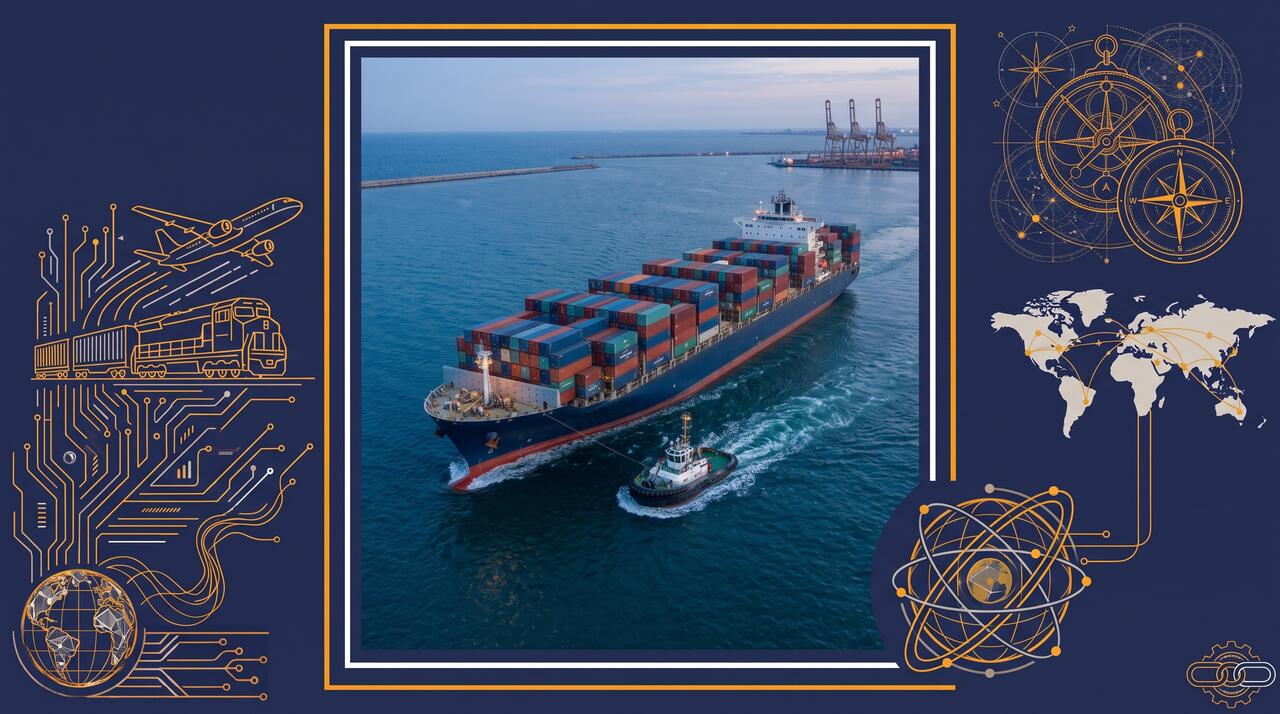
China-US Ocean Rates Hold Steady as Post-Holiday Space Tightens - TFX Update wk. October 12, 2026
China to US ocean freight rates remain steady, but vessel rolls, booking cancellations, and tight pre-holiday space are creating major shipping risks ahead of China’s October shutdown.

China Holiday Rush Tightens Ocean Freight Space to the US - TFX Update wk. September 21, 2026
China to US ocean freight rates remain steady, but vessel rolls, booking cancellations, and tight pre-holiday space are creating major shipping risks ahead of China’s October shutdown.

Blank Sailings and Rollovers Dominate May Freight Market - TFX Update wk. May 4, 2026
China-US rates remain stable at $2,700-$3,800, but blank sailings and vessel overloading are causing record shipment rollovers and strategic rerouting through Busan.
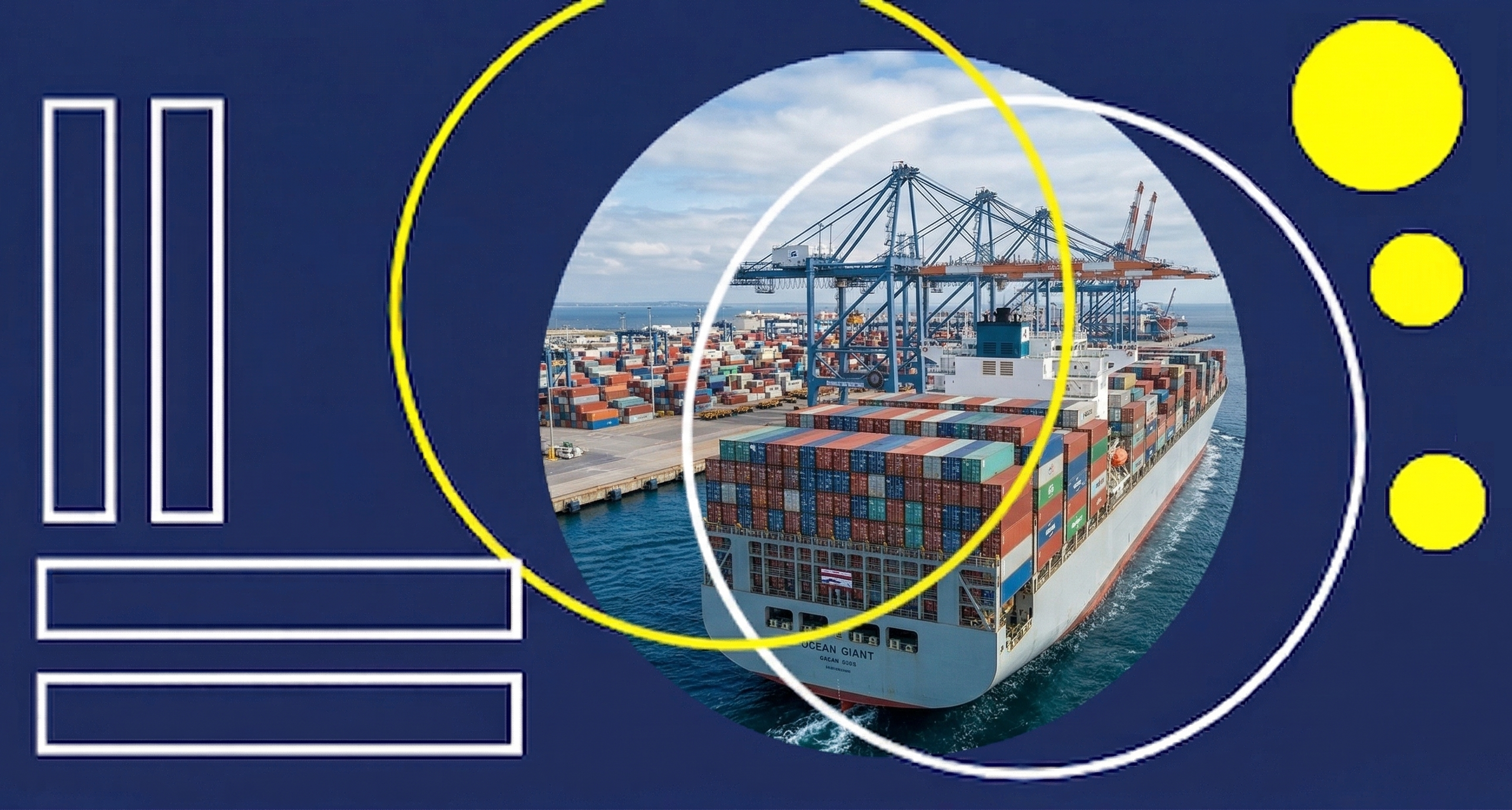
Ocean Rates Up as Volumes Continue to Sink - TFX Update wk. March 23, 2026
Understand why ocean freight rates are climbing despite record low volumes. Our March 2026 update covers the $600 rate hikes, new emergency fuel surcharges, and how blank sailings are impacting China-to-US shipping costs.
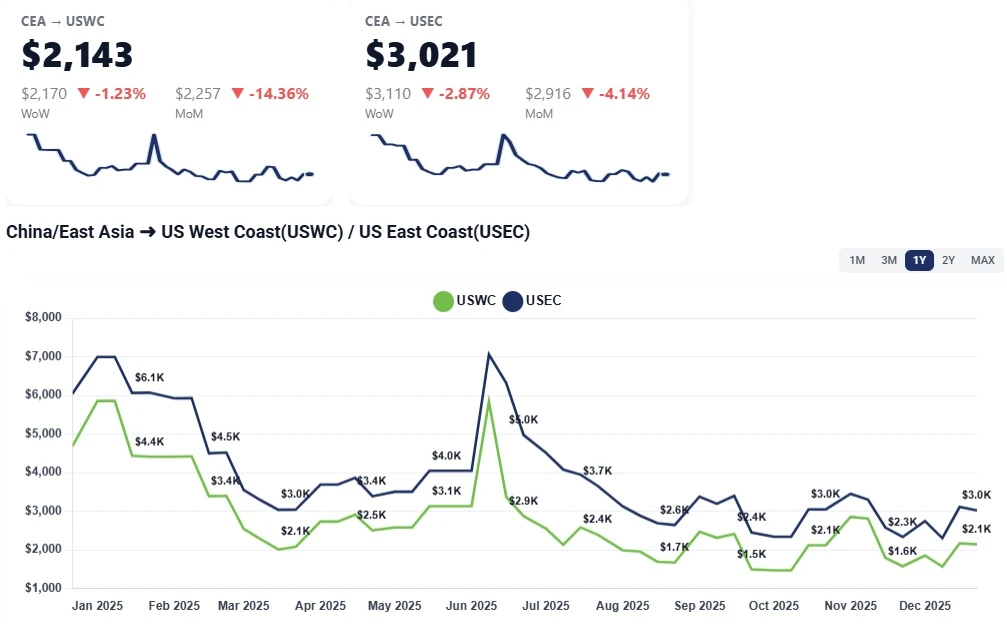
Holiday Pause Masks January Price Pressure on China–US Lanes - TFX Update wk. December 22, 2025
China–US ocean freight rates to the West and East Coasts held steady this week amid a holiday slowdown. Learn what’s driving the flat market and why January GRIs could push prices higher.

Shippers Continue to Confront Higher Costs While Freight Forwarders Face Fierce Competition - TFX Update wk. September 8, 2025
Last week's transpacific GRI slowly comes down as carriers test market resilience ahead of Golden Week.

Carriers Push Back with GRIs, but Market Fundamentals Push Harder - TFX Update wk. January 12, 2026
China–US ocean freight rates fell week-over-week as weak January demand erased early GRIs. See what’s driving transpacific pricing and where rates may head next.