Ocean Rates Hold Firm as China Factories Reopen - TFX Update wk. March 2, 2026
The Lead:
The transition into March 2026 marked the most significant administrative shift in U.S. trade history as the executive branch pivoted from country-specific "Reciprocal Tariffs" to a broad 15% global surcharge under Section 122. This shift was a direct response to the Supreme Court's invalidation of the IEEPA-based tariff authority, which has left the U.S. government facing potential refund claims exceeding $175 billion. While the new 15% flat rate offers a lower duty for countries like China and India compared to the previous regime, it represents a net increase for allies like the UK and Italy. Consequently, the global trade environment remains highly unstable, with the European Union threatening to reactivate retaliatory levies and the US Trade Representative preparing a fresh wave of industry-specific investigations to replace the temporary 150-day surcharge before it expires in July. All while the US began military activity in Iran late last week. It is still to be determined how, if at all, this conflict will impact global trade policy with the Trump administration or abroad.
This Week’s Ocean, Air & Freight Markets
China-US Ocean Freight Market:
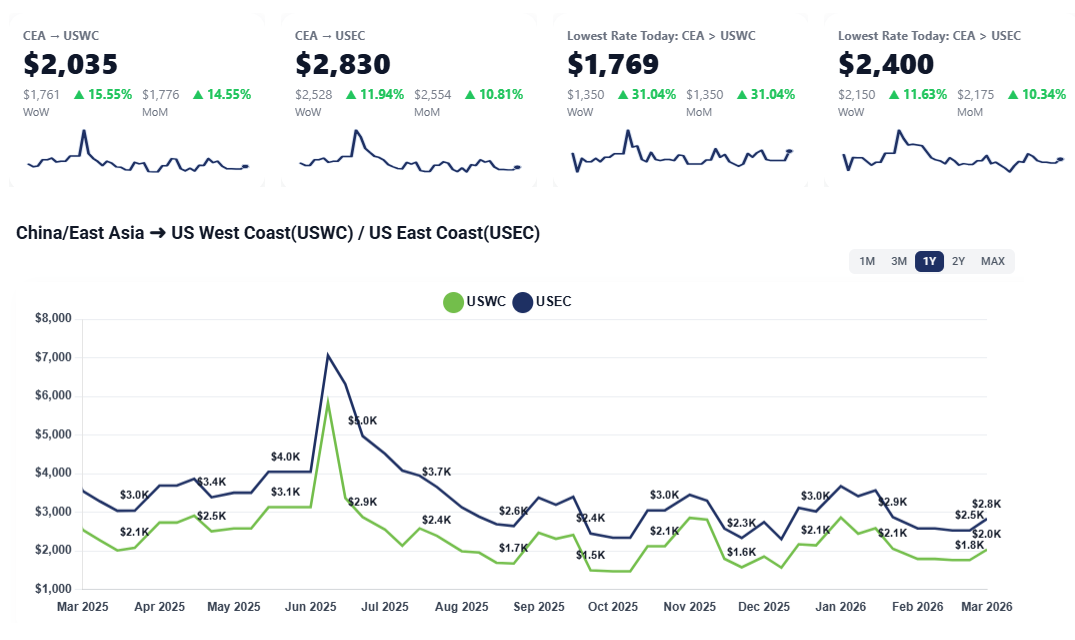
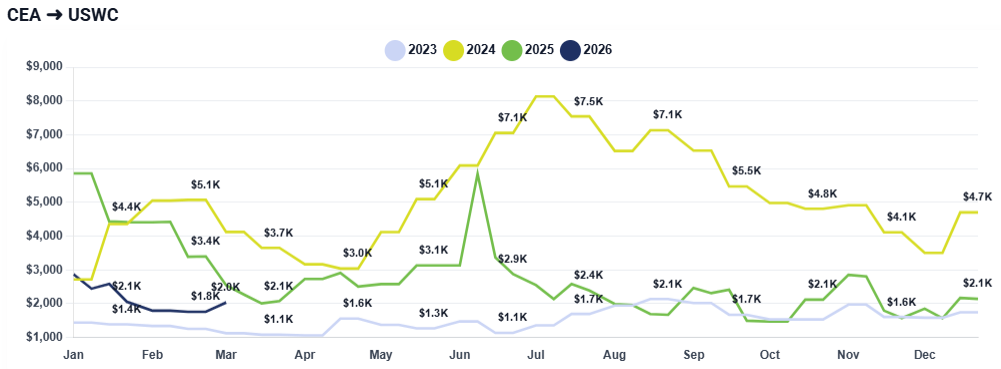
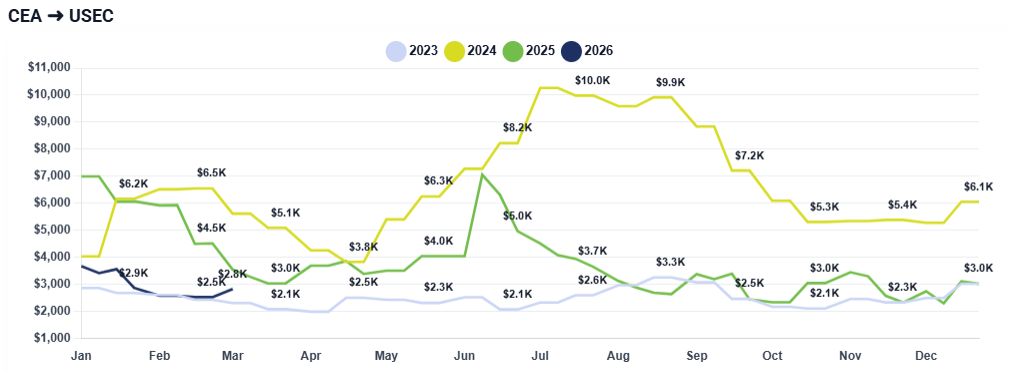
The market is showing the first signs of post-holiday stabilization as Asia resumes operations. While rates have largely bottomed out at the breakeven levels established during the Lunar New Year, the anticipated post-holiday rate crash has not materialized, with pricing currently holding steady.
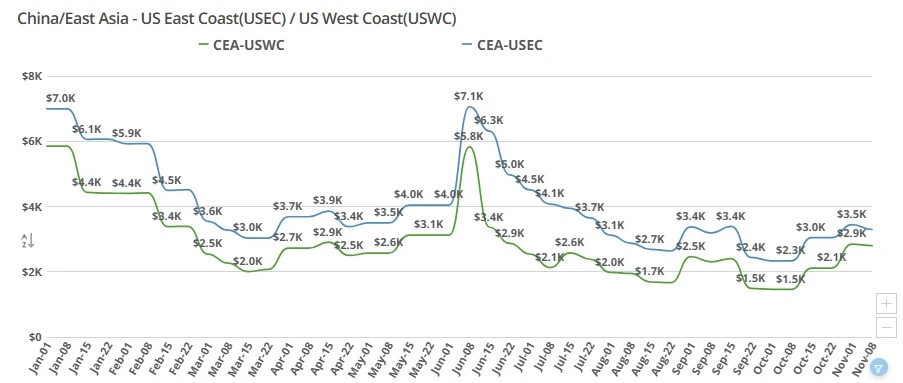
CEA to USWC: Rates have maintained their floor at approximately $1,450 to $1,500 per container. Despite a lack of upward pressure, there has been no further significant erosion in pricing this week.
CEA to USEC: East Coast rates continue to hold steady in the $2,400 to $2,500 range. The market remains balanced at these low levels as carriers prioritize volume recovery over aggressive price hikes.
Read more about the state of the ocean freight spot market with Freight Right’s TrueFreight Index.
What Happened This Past Week:
Post-Holiday Factory Resumption: Factories in China and Vietnam have officially reopened, though they are currently working through a backlog of existing orders rather than new demand.
Absence of Rate War: To the surprise of some analysts, carriers have not engaged in a significant "price war" to capture the first post-holiday shipments, allowing rates to stabilize at breakeven levels.
Low "Breadcrumb" Volumes: Current shipments consist primarily of leftover inventory, referred to as "breadcrumbs", from before the holiday shutdown, rather than a fresh surge of new orders.
Carrier Profitability Floor: At current levels, carriers are operating at or near cost. This has created a natural floor, as further reductions would lead to active losses that carriers are currently unwilling to absorb.
Air Freight Softening: Air freight rates have cooled significantly from January peaks, now settling into the $3.50 to $4.50 per kilogram range as space becomes more available post-holiday.
Looking Ahead:
The market is entering a critical observation period. The next two to three weeks will reveal the true strength of the 2026 shipping season as the new order volume begins to hit the water.
Current projections suggest that rates will remain flat through the end of March. The major focal point for the industry is now the April/May contract season. Carriers are closely monitoring March volumes; if demand remains tepid, they may be forced to utilize more aggressive capacity management, such as extended blank sailings, to bolster their bargaining position for long-term contract negotiations. Shippers should expect a relatively stable, low-rate environment in the short term, with potential volatility returning in late spring.
In the News:
WSJ: World Trade Surged in 2025 Despite Higher Tariffs
https://www.wsj.com/economy/trade/world-trade-surged-in-2025-despite-higher-tariffs-f122a534
BBC: What tariffs has Trump introduced and why?
https://www.bbc.com/news/articles/cn93e12rypgo
Global Trade Magazine: Port of LA Sees Stable Orders Amid Trade Policy Shifts
https://www.globaltrademag.com/port-of-la-sees-stable-orders-amid-trade-policy-shifts/
Reuters: US tariff lawsuits returned to trade court to determine next steps
https://www.reuters.com/world/us-tariff-lawsuits-returned-trade-court-determine-next-steps-2026-03-02/
CNN: Trump’s new tariffs might be illegal, but that may not ruin his tariff quest
https://edition.cnn.com/2026/03/01/business/trump-tariffs-supreme-court-section-122
More News
Carriers Hold the Line at $1,500 Floor - TFX Update wk. March 9, 2026
Ocean rates hold steady at $1,500 for USWC as Chinese factories reopen. Explore why the post-holiday rate war never arrived and what this means for April contract negotiations.

Transpacific Carriers Face Losses as Feb Bookings Close - TFX Update wk. February 2, 2026
Ocean freight rates from China to USWC have hit a breakeven low of $1,450 per container. As the Chinese New Year halts Asian manufacturing, explore why rates are falling, the impact of late-week bookings, and the outlook for March contract negotiation.
US East Coast Freight Targets $4,500 Threshold - TFX Update wk. May 11, 2026
China to US rates surge toward $4,500 as carriers implement mid-month hikes. Learn how post-holiday demand, IEEPA refunds, and shifting air freight trends are redefining Trans-Pacific logistics strategies.
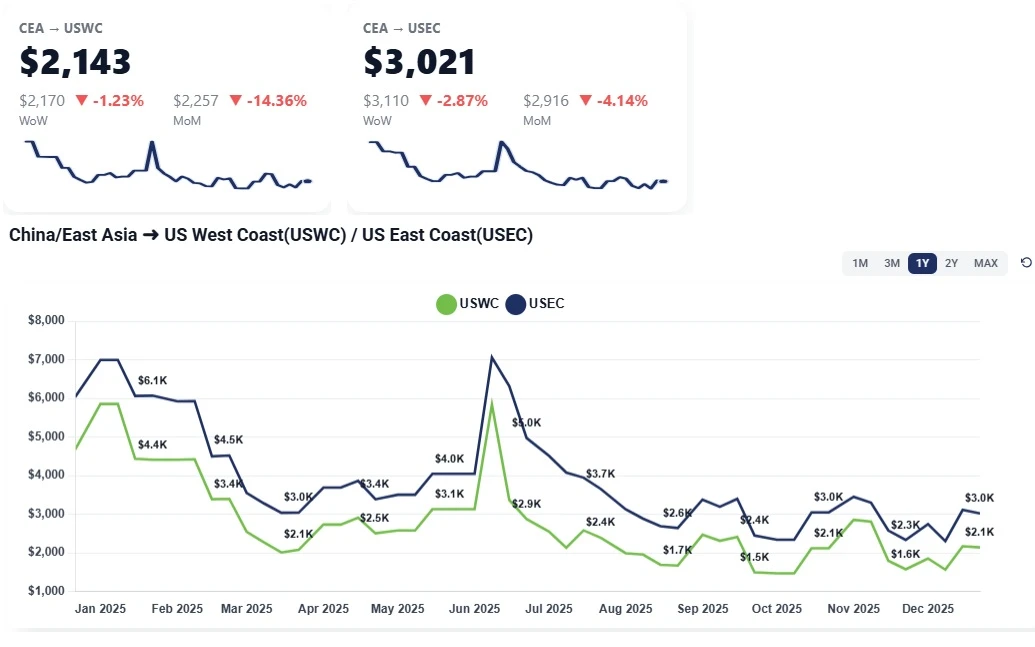
Ocean Freight Rates Hold Firm as Carriers Defend Pricing Into 2026 Contract Season - TFX Update wk. December 29, 2025
Transpacific ocean freight rates from China to the US West and East Coasts remained elevated week over week as carriers held firm through the holiday slowdown, positioning pricing ahead of Chinese New Year and upcoming contract season negotiations.

China–US Ocean Freight Market Holds Firm, but Promotional Rates Gain Traction - TFX Update wk. June 22, 2026
China–US ocean freight rates remain elevated, with CEA to USWC pricing above $6,000 while promotional carrier deals help some shipments move lower. Learn what is driving rates and what to expect heading into July.
Ocean Rates Rise Again as China Holiday Squeezes Capacity - TFX Update wk. September 14, 2026
China to US ocean freight rates rise $500–$600 as blank sailings, tight capacity and unstable vessel schedules intensify ahead of China’s October holiday.
China-US Ocean Rates Hold Steady as Post-Holiday Space Tightens - TFX Update wk. October 12, 2026
China to US ocean freight rates remain steady, but vessel rolls, booking cancellations, and tight pre-holiday space are creating major shipping risks ahead of China’s October shutdown.
Carriers Prepare August GRIs Following Sharp West Coast Rate Decline - TFX Update wk. July 27, 2026
China to US ocean freight rates declined again this week, led by sharp drops on West Coast routes while East Coast pricing remained relatively resilient. Learn what's driving the market correction, August rate increases, and what to expect as peak shippin
China-US Ocean Rates Ease Again as Post-Peak Lull Deepens - TFX Update wk. November 10, 2025
Transpacific ocean freight rates continue to decline as post-peak demand cools. China–US West Coast rates near $1,700, East Coast around $2,600 per FEU.

Ocean Freight Rates Hold Firm as Carriers Keep Capacity Tight - TFX Update wk. August 24, 2026
China to US ocean freight rates remain firm as West Coast rates rebound 9% and East Coast rates rise 3%. See what’s driving the market and the outlook for September.