- Home
- >
- News
- >
- China-US Ocean Freight Rates Hold Steady as November Easing Remains Possible - TFX Update wk. October 26, 2026
China-US Ocean Freight Rates Hold Steady as November Easing Remains Possible - TFX Update wk. October 26, 2026
Key Takeaways
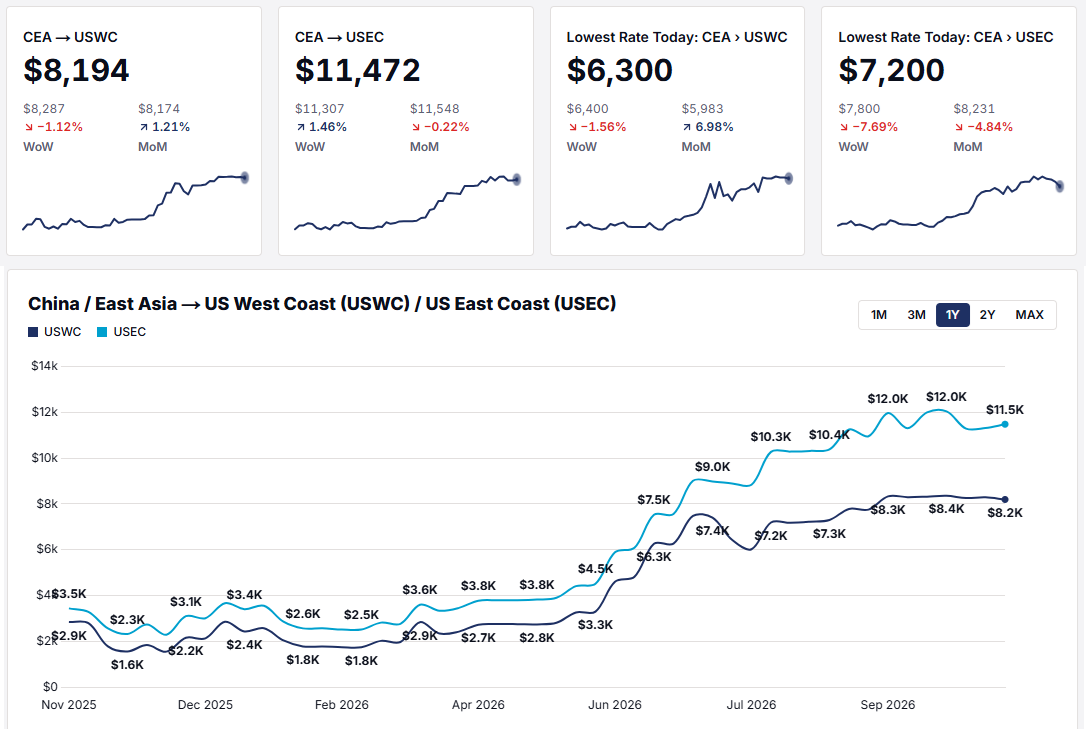
Rates held steady. China-US ocean pricing was unchanged week over week, with spot options as low as $6,300 to the West Coast and $7,200 to the East Coast.
Space is improving. Softer shipment volumes and more consistent vessel schedules are giving importers greater booking flexibility.
November easing remains possible. Rates are expected to stay broadly stable through early November, with potential for modest declines.
Urgent cargo is shifting to air. Ocean transit may miss holiday deadlines, while tighter air capacity and rising rates make last-minute replenishment more expensive.
India still needs early booking. Capacity is improving but has not fully recovered, so importers should maintain longer lead times.
The Lead:
Trade policy last week combined selective tariff relief with continued legal and diplomatic uncertainty. Washington revised its Canadian tariff list while facing a new court challenge, and Ottawa pursued both domestic industrial support and closer commercial ties with Türkiye.
USTR proposed extending the suspension of China maritime measures, while the UK signaled continued import duty relief. USMCA labor enforcement produced concrete outcomes in Mexico, but renewed concerns over Airbus financing introduced another risk to the US–EU tariff truce.
Overall, the week brought targeted adjustments and negotiating progress without a broad resolution of the principal trade disputes.
This Week’s Ocean, Air & Freight Markets
China-US Ocean Freight Market:
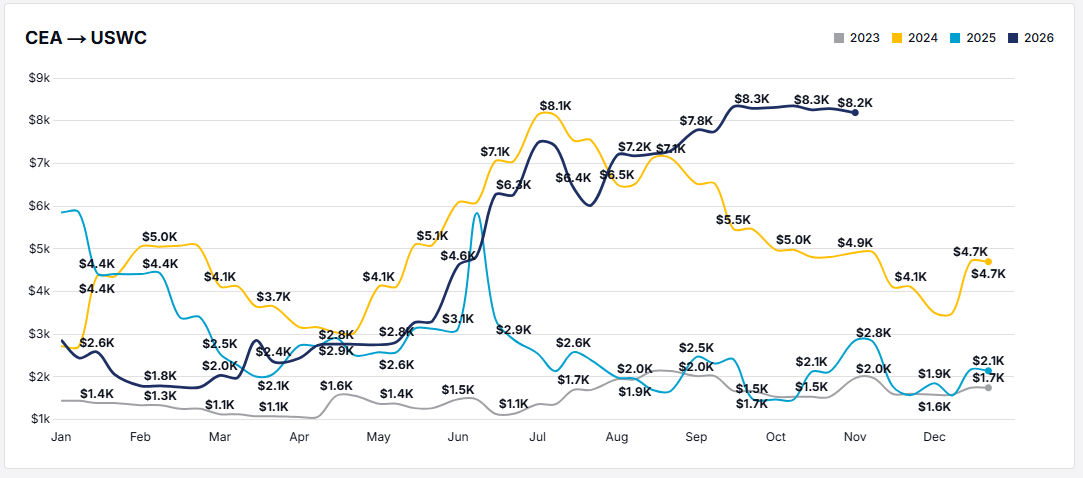
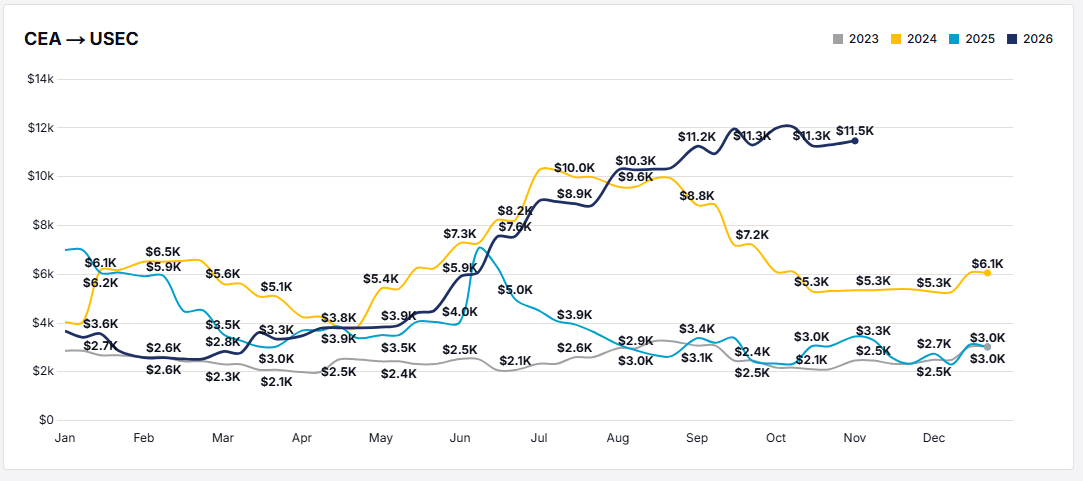
China to US ocean freight rates held steady during the week. Pricing carried over from last week, while space availability improved and vessel schedules became more consistent. As the traditional pre-holiday ocean shipping peak fully closes out, pricing has settled into a steady holding pattern across both coasts.
CEA to USWC: Rates remained unchanged week over week, with no increases or decreases reported.
CEA to USEC: Rates also held steady, extending the previous week’s pricing.
Freight Right’s Lowest Rate indicators are finding that importers can find spot rates as low as $6,300 from China to US West Coast and $7,200 from China to US East Coast. Talk to your freight forwarder about options available to you.
Read more about the state of the ocean freight spot market with Freight Right’s TrueFreight Index.
A Closer Look:
Ocean space availability is improving. Softer shipment volumes are easing pressure on capacity. Space conditions have improved gradually, giving importers more booking flexibility.
Vessel schedules have stabilized. As recent typhoon disruptions in Asia have passed, schedules have become more consistent, helping reduce operational uncertainty.
Urgent holiday replenishment is shifting to air. For many shipments discussed in the update, ocean transit no longer fits the required holiday delivery window. Importers needing last-minute inventory are moving smaller shipments by air, while ongoing replenishment continues by ocean.
India remains a separate capacity concern. Space availability has improved, but conditions have not fully recovered. Importers shipping from India should continue booking early.
Looking Ahead:
China to US ocean rates are expected to remain broadly stable through the first half of November, with the possibility of modest declines. Improving space availability and more consistent schedules suggest limited near-term upward pressure on pricing.
For routine replenishment, these conditions offer greater flexibility when comparing sailings and planning bookings. Holiday-sensitive cargo requires closer attention to the full delivery timeline, including customs clearance and inland transportation. Where ocean service cannot meet the deadline, air freight remains an option, although tighter space and rising rates are increasing the cost of urgent shipments.
Importers sourcing from India should maintain longer booking lead times as capacity continues to recover.
In the News:
ABC News: Trump's 50% tariffs on Canada take effect as Carney vows to retaliate
https://abcnews.com/Business/trumps-proposed-tariffs-canada-hurtle-deadline-amid-trade/story?id=135833861
CNBC: Honda warns 50% Canada auto tariffs would be catastrophic for auto industry
https://www.cnbc.com/2026/10/27/honda-warns-50percent-canada-auto-tariffs-would-be-catastrophic.html
WSJ: America Needs Canada’s Aluminum. Trump’s Tariff Exposed Just How Badly
https://www.wsj.com/business/aluminum-tariff-canada-trump-f2555b38
ABC News: Supreme Court invalidates most of Trump's tariffs
https://abcnews.com/Politics/supreme-court-invalidates-trumps-tariffs/story?id=129036085
Bloomberg: Trump’s Trade General Fights Back as Tariffs Become Toxic
https://www.bloomberg.com/news/newsletters/2026-10-26/trump-s-tariff-salesman-and-election-politics-of-trade
More News

China-U.S. Ocean Freight Outlook: Stable October Rates, November Easing - TFX Update wk. October 19, 2026
China-U.S. ocean freight rates hold near $7,000 to the West Coast and $8,000 to the East Coast as space improves and demand eases.

China-US Ocean Spot Rates Hold Steady: Early Booking Urged for Q4 Recovery - TFX Update wk.October 5, 2026
Track China to US West and East Coast ocean freight rate trends during Golden Week. Discover key market drivers, Q4 booking recommendations, and air freight forecasts.
China–US West and East Coast Rates Hold Flat After Short-Lived December Rate Spike - TFX Update wk. December 1, 2025
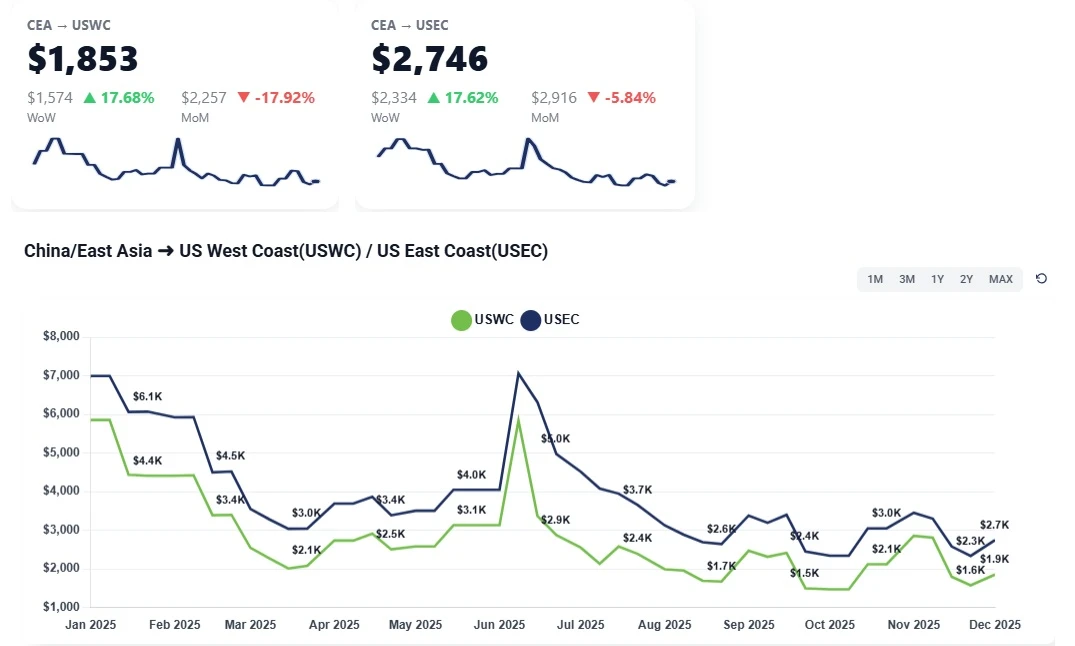
Weekly ocean freight update on China–US West and East Coast lanes as an early December GRI fades, leaving spot rates near November levels amid weak demand.
Carriers Prepare August GRIs Following Sharp West Coast Rate Decline - TFX Update wk. July 27, 2026
China to US ocean freight rates declined again this week, led by sharp drops on West Coast routes while East Coast pricing remained relatively resilient. Learn what's driving the market correction, August rate increases, and what to expect as peak shippin

Golden Week Ocean Rates Hold Steady as Carriers Extend Pricing Into Mid-October - TFX Update wk. September 28, 2026
Ocean freight rates hold steady ahead of Golden Week as carriers extend rates through October 14th. Discover key transpacific market trends and forecast post-holiday congestion risks.

Ocean Freight Market Enters Holding Pattern Ahead of September - TFX Update wk. August 17, 2026
China-US ocean freight rates remain elevated in mid-August, with West Coast discounts emerging while East Coast pricing stays firm. See what carrier capacity cuts, blank sailings and demand trends could mean for September.

Ocean Freight Rates Hold Firm as Carriers Keep Capacity Tight - TFX Update wk. August 24, 2026
China to US ocean freight rates remain firm as West Coast rates rebound 9% and East Coast rates rise 3%. See what’s driving the market and the outlook for September.

China-US Ocean Rates Hold Steady as Post-Holiday Space Tightens - TFX Update wk. October 12, 2026
China to US ocean freight rates remain steady, but vessel rolls, booking cancellations, and tight pre-holiday space are creating major shipping risks ahead of China’s October shutdown.
China-U.S. Ocean Freight Steadies as Carriers Prepare $1,000 November GRI - TFX Update wk. October 27, 2025
U.S-China trade deal specifics; transpacific freight rates hold steady as carriers plan a $1,000 GRI for Nov. 1, easing fears after tariff threats and muted seasonal demand.
Spot Rates Plunge on Both Coasts With Short Holiday Week and Weak Imports - TFX Update wk. November 24, 2025
Transpacific ocean freight rates dropped sharply this week as weak import demand and the Thanksgiving holiday slowdown pushed China–US West and East Coast spot prices to new lows. Get the latest market drivers and outlook.